
Table of Contents
- Introduction
- What Are Seed Corns?
- How Do Seed Corns Form?
- What Do They Look Like? Clinical Presentation
- Assessment: What to Look For Before You Treat
- Treatment: How to Safely Remove Seed Corns
- Products to Reduce Callus and Manage Seed Corns
- Offloading: The Missing Piece
- Professional Considerations (Canada)
- Key Takeaways
- Ethical Closing Statement
- FAQs
Introduction
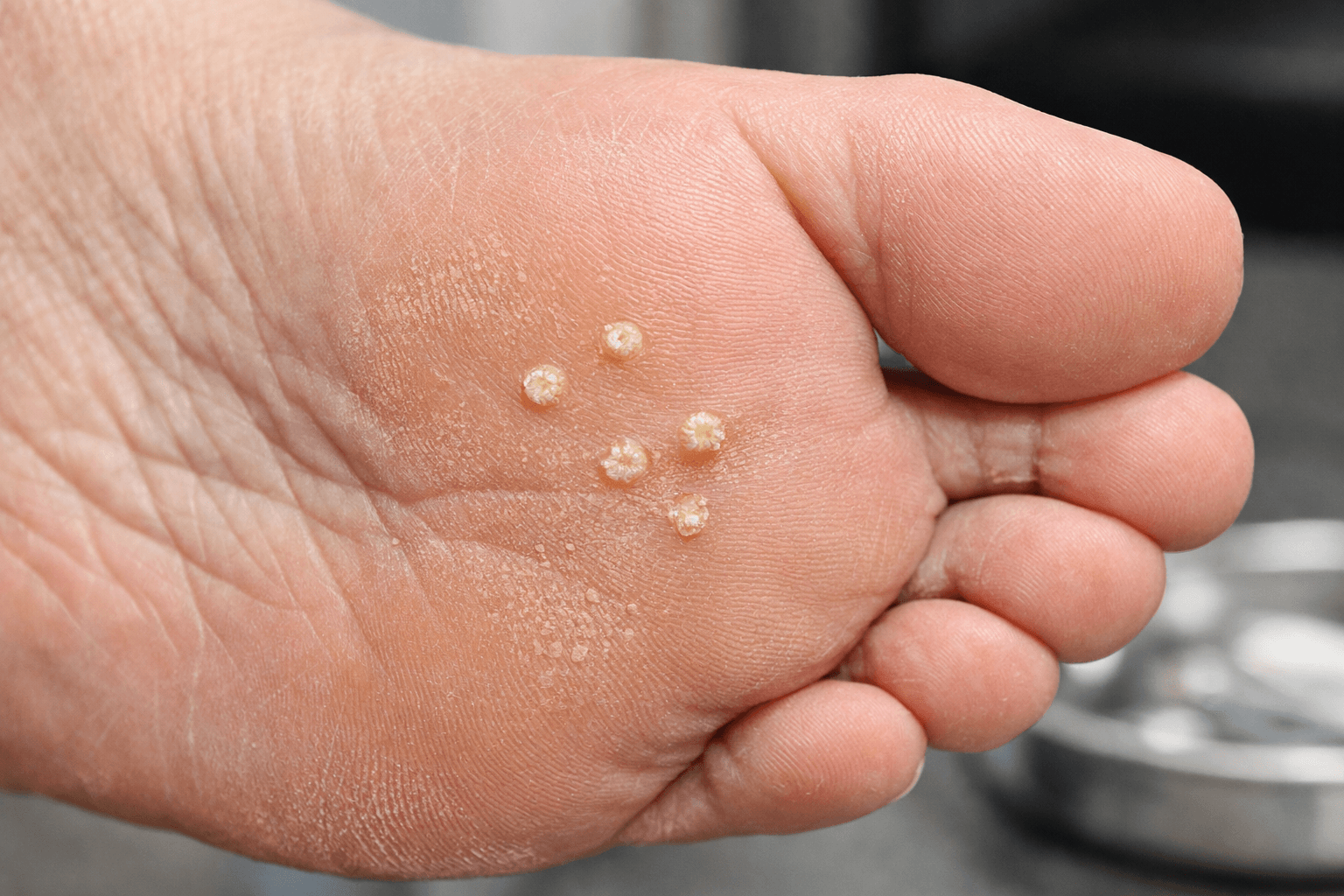
Seed corns — also known as heloma miliare — are small, discrete, hyperkeratotic lesions typically found on the plantar surface of the foot. Unlike the more common hard corn (heloma durum) or soft corn (heloma molle), seed corns are distinctively tiny — often just 2–4 mm in diameter — and they can appear individually or in clusters, resembling a scattering of small seeds pressed into the skin. Hence the name. They are most commonly found on the heel, the ball of the foot, and the plantar fat pad — areas subject to repeated pressure, friction, and shear force. However, they can also appear under the metatarsal heads, near bony prominences, or in areas of dry, dehydrated skin. Seed corns: what foot care nurses need to know is essential for accurate identification and safe clinical management in practice.
What Are Seed Corns?
Seed corns — also known as heloma miliare — are small, discrete, hyperkeratotic lesions typically found on the plantar surface of the foot.
Seed corns: what foot care nurses need to know begins with recognizing their characteristic size, location, and presentation.
How Do Seed Corns Form?
Seed corns develop as a protective response of the skin to localized mechanical stress. The epidermis responds to repeated pressure or friction by producing excess keratin, forming a dense, compacted plug of dead skin cells that thickens inward toward the dermis.
Several contributing factors include:
• Dry, dehydrated skin — the single most common contributing factor; skin that lacks moisture loses elasticity and becomes more susceptible to focal keratosis
• Ill-fitting footwear — creates concentrated pressure points on the plantar surface
• Bony prominences or structural foot deformities — altered weight distribution increases focal loading
• Gait abnormalities — abnormal biomechanics increase shear forces on specific plantar regions
• Hyperhidrosis or anhidrosis — both extremes of perspiration can disrupt the skin’s normal protective function
• Age-related fat pad atrophy — reduced plantar padding in older adults concentrates pressure directly onto bony structures
• Diabetes and peripheral neuropathy — loss of protective sensation means abnormal pressure goes undetected longer, allowing lesions to develop and deepen
Understanding seed corns: what foot care nurses need to know includes identifying mechanical and skin-related contributing factors.
What Do They Look Like? Clinical Presentation
Seed corns have a very distinct appearance once you know what you’re looking for:
• Size: Very small — 2 to 5 mm; noticeably smaller than a standard hard corn
• Shape: Round, well-demarcated, almost “punched out” in appearance
• Color: Yellowish-white to translucent, with a hard, waxy or pearlescent centre
• Texture: Firm and discrete to palpation — they feel like a small bead or seed just beneath the skin surface
• Distribution: Can be solitary or appear in multiples; clustered presentations are common
• Surrounding skin: Often surrounded by dry, hyperkeratotic skin; the lesion itself sits within or is flush with the plantar surface
• Pain pattern: Can be surprisingly painful relative to their small size — clients often describe a sharp, pin-like sensation with direct weight-bearing, as if stepping on a stone or piece of gravel
On debridement, a seed corn reveals a dense, hard, translucent nucleated core — the keratin plug — that extends below the skin surface. This is the clinical hallmark that distinguishes it from a plantar wart (which will show disrupted skin lines and pinpoint bleeding on debridement).
Seed corns: what foot care nurses need to know requires careful observation of these defining clinical features.
Assessment: What to Look For Before You Treat
Seed corns: what foot care nurses need to know requires a thorough and structured clinical assessment before intervention.
A thorough assessment before any intervention is non-negotiable. Here’s what to consider:
History
• Location and duration of the lesion
• Pain level and whether it affects gait or ADLs
• Previous treatments and client response
• Footwear habits — type, fit, frequency of change
• History of diabetes, peripheral vascular disease, or neuropathy
• Skin care routine — moisturizer use, foot soaking habits
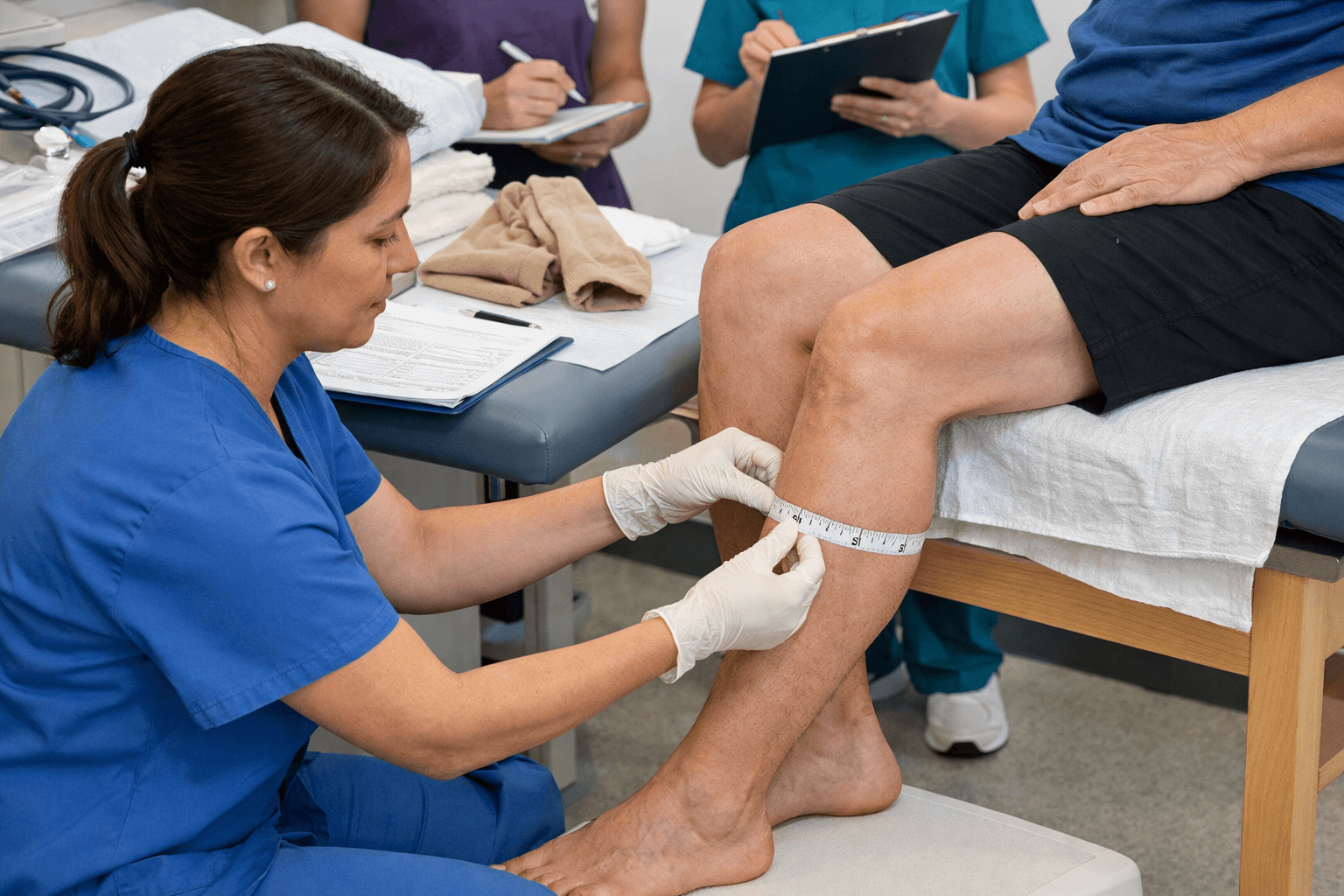
Vascular Assessment
• Palpate dorsalis pedis and posterior tibial pulses
• Observe capillary refill time
• Note skin temperature, colour, and texture
• Any signs of compromised circulation warrant extra caution — aggressive debridement is contraindicated in ischemic tissue
Neurological Assessment
• Assess for protective sensation (particularly in diabetic clients)
• Note any reported numbness, tingling, or absence of pain in the affected area
• A client with neuropathy who is not feeling pain does not mean the lesion is benign — it often means the opposite
Differentiating Seed Corns from Plantar Warts
This is a clinical skill every foot care nurse must be confident in:
Getting this distinction right protects your client and your practice.
Treatment: How to Safely Remove Seed Corns
Seed corns: what foot care nurses need to know includes safe, controlled, and tissue-preserving treatment techniques.
Step 1 — Skin Softening and Preparation
Before any debridement, soften the hyperkeratotic tissue to reduce the force required and minimize trauma to surrounding skin.
• A brief warm soak (5–10 minutes) or a warm, damp towel wrap to the plantar surface
• Application of a urea-based cream prior to the appointment if the client can prep at home
• Once the skin is softened, dry thoroughly before beginning
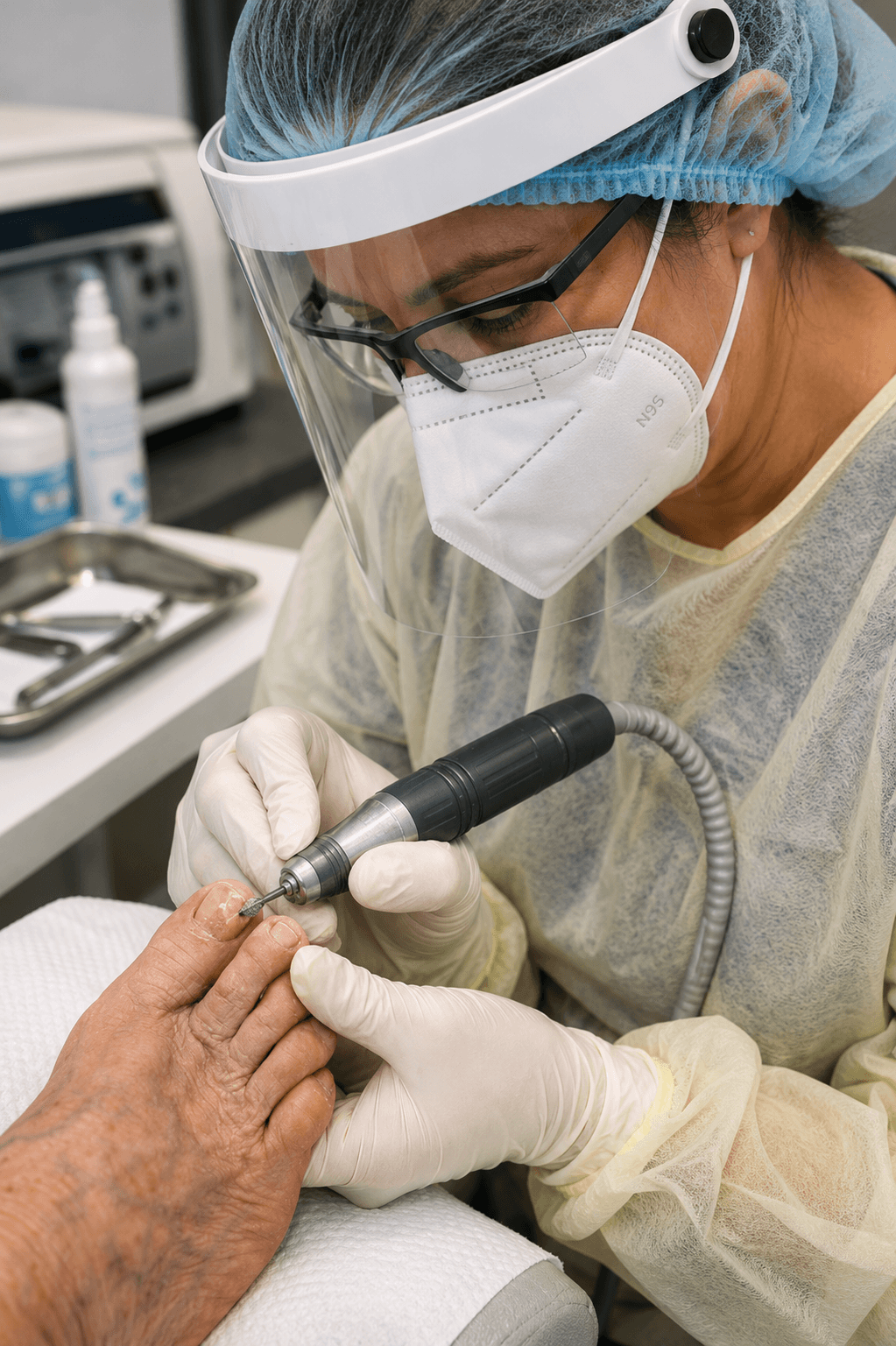
Step 2 — Debridement with a Gouge Blade or scalpel blade
The gouge blade (also called a scalpel gouge or podiatry curette) is your primary instrument for seed corn removal. The curved, scoop-shaped blade allows precise enucleation — the process of “scooping out” the keratin core from the surrounding tissue.
Technique:
• Position the blade at the edge of the lesion
• Apply gentle downward and lateral pressure to work beneath the keratin core
• Use a controlled, scooping motion to lift and excise the plug cleanly
• Work in a single, deliberate movement where possible — multiple passes increase tissue trauma
• Remove the full keratin plug, including the point (apex), which is the most painful component
• Confirm removal by inspecting the base of the enucleation site — you should see clean, healthy tissue with no residual hard core
The goal is a clean cavity, not a bloody one. You are removing compacted keratin, not cutting into dermis.
Step 3 — Carbide Ball Burr Reduction
Once the core is removed, a carbide ball burr (or carbide cylinder burr, depending on the shape of the lesion) is used to:
• Smooth and feather the edges of the surrounding callus
• Reduce the overall thickness of hyperkeratotic tissue around the enucleation site
• Create a more even plantar surface to redistribute pressure
Technique:
• Use at a low to medium speed setting — seed corns are small and precise work is required
• Keep the burr moving — do not hold it stationary in one spot
• Work from the centre outward in a circular or sweeping motion
• Check depth frequently — the plantar fat pad is relatively thin in elderly or atrophied feet
• Remove the minimum necessary; over-reduction thins the plantar tissue and increases discomfort
The carbide ball burr is particularly effective for reaching into the curved edges of a fresh enucleation cavity and for addressing clustered seed corns where multiple adjacent lesions need tidying.
Products to Reduce Callus and Manage Seed Corns
Between appointments, the right homecare products make a measurable difference in recurrence rate and client comfort.
Urea-Based Emollients
Urea is the gold standard keratolytic for plantar skin. It works by breaking the hydrogen bonds in keratin, softening and exfoliating thickened tissue.
• 10–25% urea cream — daily application to the entire plantar surface; ideal for maintenance and prevention
• 40% urea cream — targeted spot application to areas of heavy callus build-up; advise clients to apply, cover with a sock overnight, and wash off in the morning
• Examples: Footlogix Cracked Heel Foam, Footlogix DD Foam, Gehwol Fusskraft, Flexitol Heel Balm, CCS Foot Cream, Uremol 10 or 20
It can be used between appointments for ongoing callus management.
• Available as creams, gels, or foams
• Use with caution in diabetic or neuropathic clients — avoid in compromised circulation
• Not appropriate for use on open or inflamed tissue
Ongoing care is an important part of seed corns: what foot care nurses need to know in reducing recurrence.
Offloading: The Missing Piece
Seed corns: what foot care nurses need to know emphasizes that pressure redistribution is essential for long-term outcomes.
Removing a seed corn without addressing the pressure that caused it is treating the symptom, not the problem. Offloading is how you reduce recurrence and truly serve your client.
Padding
• Aperture (donut) padding
• Metatarsal pads
• Heel cups and cushioning insoles
Footwear Education
• Wide toe box
• Adequate cushioning
• Proper fit
• Avoid rigid footwear
• Moisture-wicking socks
Professional Considerations (Canada)
In Canada, foot care nursing must align with provincial regulatory standards. Scope of practice varies by province and employer. Completion of education provides a certificate of completion and does not independently authorize practice.
For further learning, refer to:
- AFCN Learning Institute education hub
- Foot care nursing foundational education
- Infection prevention and reprocessing education
- Scope of practice resources
- Clinical skills development
Key Takeaways
• Seed corns are small but clinically significant
• Assessment must precede treatment
• Proper technique prevents tissue damage
• Offloading reduces recurrence
• Homecare improves outcomes
• Documentation supports safe practice
Ethical Closing Statement
Seed corns: what foot care nurses need to know supports safe, ethical, and informed nursing practice.
All care must align with provincial regulations, employer policies, and individual nursing scope of practice.
https://www.afcnlearninginstitute.com/collections/foot-nurse-skills-worksop-series