
Table of Contents
- Understanding the Science Behind Compression Therapy
- Scope of Practice and Regulatory Considerations in Canada
- Clinical Application: From Assessment to Client Education
- Safety and Contraindications
- Ethical Considerations in Compression Therapy
- Common Misconceptions About Medical Compression Therapy Certification
- Professional Insight: Why Structured Education Matters
- Key Takeaways
- FAQs
Medical Compression Therapy Certification
Medical Compression Therapy Certification is an educational pathway that helps nurses understand the science, safe application, and clinical considerations of compression therapy for lower limb health. For Canadian nurses working in foot care, community practice, or chronic disease management, compression therapy knowledge supports safe client care and informed clinical decision-making.
Compression garments are widely used in managing venous insufficiency, edema, and lower limb discomfort. However, appropriate assessment, garment selection, and client education require specific knowledge. Medical Compression Therapy Certification programs are designed to provide structured education that aligns with nursing scope of practice and evidence-informed care principles.
It is important to clarify that completing a compression therapy course results in a certificate of completion, not regulatory certification. Authorization to practise any intervention remains subject to provincial scope of practice standards and employer policies.
Understanding the Science Behind Compression Therapy
Compression therapy applies graduated external pressure to the lower limbs to support venous and lymphatic return. The highest pressure is typically at the ankle, gradually decreasing up the leg.
Key Physiological Principles
Compression therapy supports:
Improved venous blood flow toward the heart
Reduction of venous pooling
Decreased lower limb edema
Support of vascular valve function
Symptom relief related to chronic venous insufficiency
Graduated compression garments are classified by pressure level (measured in mmHg). Selection must be based on appropriate clinical assessment and regulatory guidelines within the nurse’s scope of practice.
Nurses interested in expanding their understanding of lower limb assessment may benefit from structured foundational foot care nursing education and related vascular assessment learning.
Beyond venous return support, compression therapy may contribute to improved microcirculation in the lower extremities. By applying controlled external pressure, tissue distension is reduced, which may help limit fluid accumulation in interstitial spaces. This mechanical support can improve client comfort and mobility when used appropriately.
Nurses should also understand that therapeutic outcomes depend on:
Correct pressure classification
Proper garment integrity
Client adherence
Ongoing reassessment
Compression garments lose elasticity over time. Client education should include guidance on replacement intervals according to manufacturer recommendations. This reinforces both safety and therapeutic effectiveness.
Scope of Practice and Regulatory Considerations in Canada
Medical Compression Therapy Certification does not expand a nurse’s legislated scope of practice. In Canada:
Scope of practice is determined by provincial regulatory colleges.
Employer policies may further define permitted activities.
Additional education supports competence but does not override legislation.
When incorporating compression therapy into care plans, nurses must consider:
Whether assessment of vascular status is within their scope
Whether a medical directive or prescriber involvement is required
Whether referral to a physician or nurse practitioner is indicated
Documentation requirements
Reviewing scope of practice education for foot care nurses is essential before integrating compression therapy into practice.
Education supports competence. Authorization depends on regulation and workplace policy.
Clinical Application: From Assessment to Client Education
Medical Compression Therapy Certification programs typically focus on practical application within safe professional boundaries.
Core Learning Areas
A structured compression therapy course may include:
Overview of compression therapy principles
Indications and contraindications
Lower limb assessment considerations
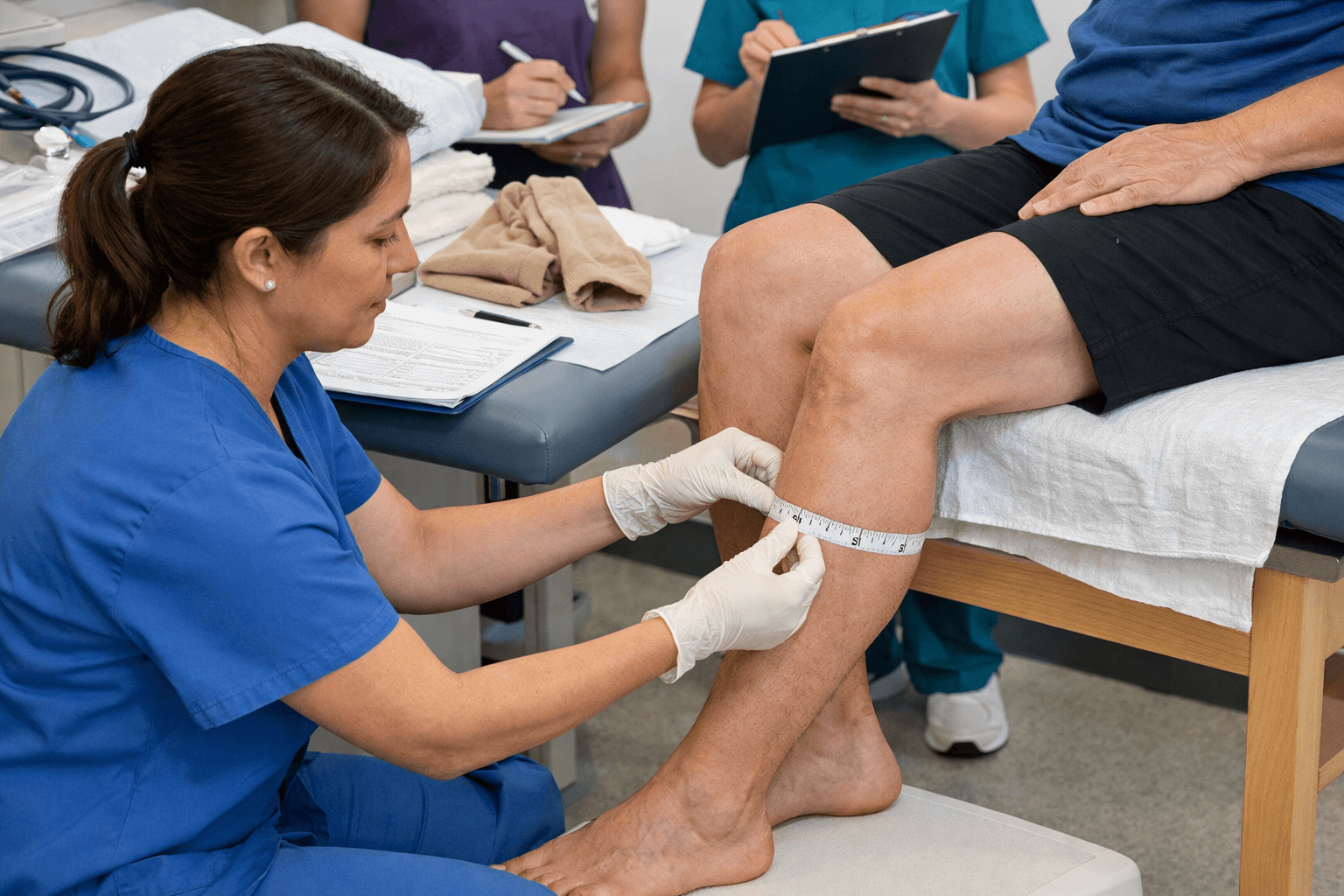
Measurement and fitting techniques
Client teaching and adherence strategies
Ethical retail considerations (where applicable)
How to Fit Medical Compression Garments
Proper fitting is central to safety and client comfort. Educational programs often teach:
Accurate limb measurement techniques
Selection of garment size based on manufacturer charts
Identifying improper fit
Teaching clients donning and doffing techniques
Monitoring for skin integrity concerns
Inadequate fit can reduce effectiveness and increase risk of complications. Nurses must also understand infection prevention practices when handling garments. Training in infection prevention and medical device reprocessing supports safe clinical environments.
Safety and Contraindications
Compression therapy is not appropriate for every client.
Potential contraindications may include:
Severe peripheral arterial disease
Certain cardiac conditions
Acute infections
Undiagnosed lower limb pain
Nurses must follow evidence-informed screening practices and collaborate with the broader healthcare team when concerns arise.
Medical Compression Therapy Certification emphasizes risk awareness and reinforces the importance of referral when findings exceed nursing scope.
For nurses returning to clinical practice, reviewing professional development resources for returning-to-practice nurses can help refresh assessment competencies before introducing new skills.
Ethical Considerations in Compression Therapy
Some practice settings involve retail components related to compression garments. Nurses must approach this ethically and transparently.
Professional standards require:
Client-centred recommendations
Clear separation between education and sales
Disclosure of potential conflicts of interest
Documentation of assessment findings
Ethical practice is central to all AFCN Learning Institute programming. Nurses are accountable to regulatory standards regardless of care setting.
Common Misconceptions About Medical Compression Therapy Certification
Misconception 1: Certification Automatically Authorizes Practice
Completion of a course provides education and a certificate of completion. It does not grant independent authority beyond provincial scope.
Misconception 2: Compression Garments Are “Low Risk”
Improper use can lead to skin breakdown or vascular compromise. Assessment and monitoring are essential.
Misconception 3: Any Compression Level Is Interchangeable
Different pressure levels serve different clinical purposes. Selection must be informed and appropriate.
Misconception 4: Education Is Only for Foot Care Nurses
While common in foot care nursing, compression therapy knowledge is also relevant in community health, chronic disease management, and geriatric care.
Professional Insight: Why Structured Education Matters
Compression therapy intersects with vascular health, wound prevention, chronic disease management, and mobility support. Structured education helps nurses:
Strengthen clinical reasoning
Improve documentation quality
Enhance interdisciplinary communication
Support client adherence through better education
Within AFCN’s broader clinical skills and tools education resources, compression therapy education complements lower limb assessment and preventative care strategies.
Ongoing learning through the AFCN Learning Institute education hub supports nurses in maintaining competence while respecting regulatory boundaries.
Key Takeaways
Medical Compression Therapy Certification provides structured education in compression therapy principles and application.
Completion results in a certificate of completion, not regulatory certification.
Scope of practice varies by province and employer in Canada.
Proper assessment and fitting are essential for safe client outcomes.
Ethical practice and documentation remain professional responsibilities.
Closing Statement
Medical Compression Therapy Certification supports nurses in developing structured, evidence-informed knowledge of compression therapy within Canadian regulatory frameworks. Education strengthens competence; safe practice depends on adherence to scope, ethical standards, and client-centred care.
https://www.afcnlearninginstitute.com/courses/medical-compression-therapy
FAQs
What is Medical Compression Therapy Certification?
Medical Compression Therapy Certification is an educational program that teaches nurses the principles, assessment considerations, and safe application of compression therapy. It results in a certificate of completion.
Does Medical Compression Therapy Certification allow a nurse to prescribe compression garments?
No. Prescriptive authority depends on provincial regulation and scope of practice. Education does not override legislative requirements.
Is compression therapy within a Canadian nurse’s scope of practice?
It may be, depending on the province, employer policy, and individual competence. Nurses must consult their regulatory college and workplace guidelines.
Why is proper fitting important in compression therapy?
Improper fit can reduce therapeutic effectiveness and increase risk of complications such as skin breakdown or discomfort. Accurate measurement and monitoring are essential.