
Table of Contents
- Introduction
- Understanding Ingrown Nails in Nursing Practice
- Ingrown Nail Management for Foot Care Nurses
- Conservative Management Approaches
- Tools and Infection Prevention
- Client Education and Prevention
- Scope of Practice and Referral
- Common Misconceptions in Ingrown Nail Care
- Professional Insight from a Nursing Education Perspective
- Key Takeaways
- Ethical Closing Statement
- FAQs
Introduction
Ingrown Nail Management for Foot Care Nurses is a foundational clinical skill in Canadian foot care nursing practice. Ingrown nails are frequently encountered across all age groups and can range from mild inflammation to significant infection and functional impairment. For nurses providing foot care services, structured assessment, conservative intervention, and prevention education are essential components of safe practice.
Ingrown Nail Management for Foot Care Nurses requires clinical judgment, infection prevention competency, and a clear understanding of regulatory boundaries. Completion of education results in a certificate of completion; however, authorization to practise is determined by provincial regulatory standards and employer policies. The scope of practice varies across Canada and must always guide clinical decision-making.
Understanding Ingrown Nails in Nursing Practice
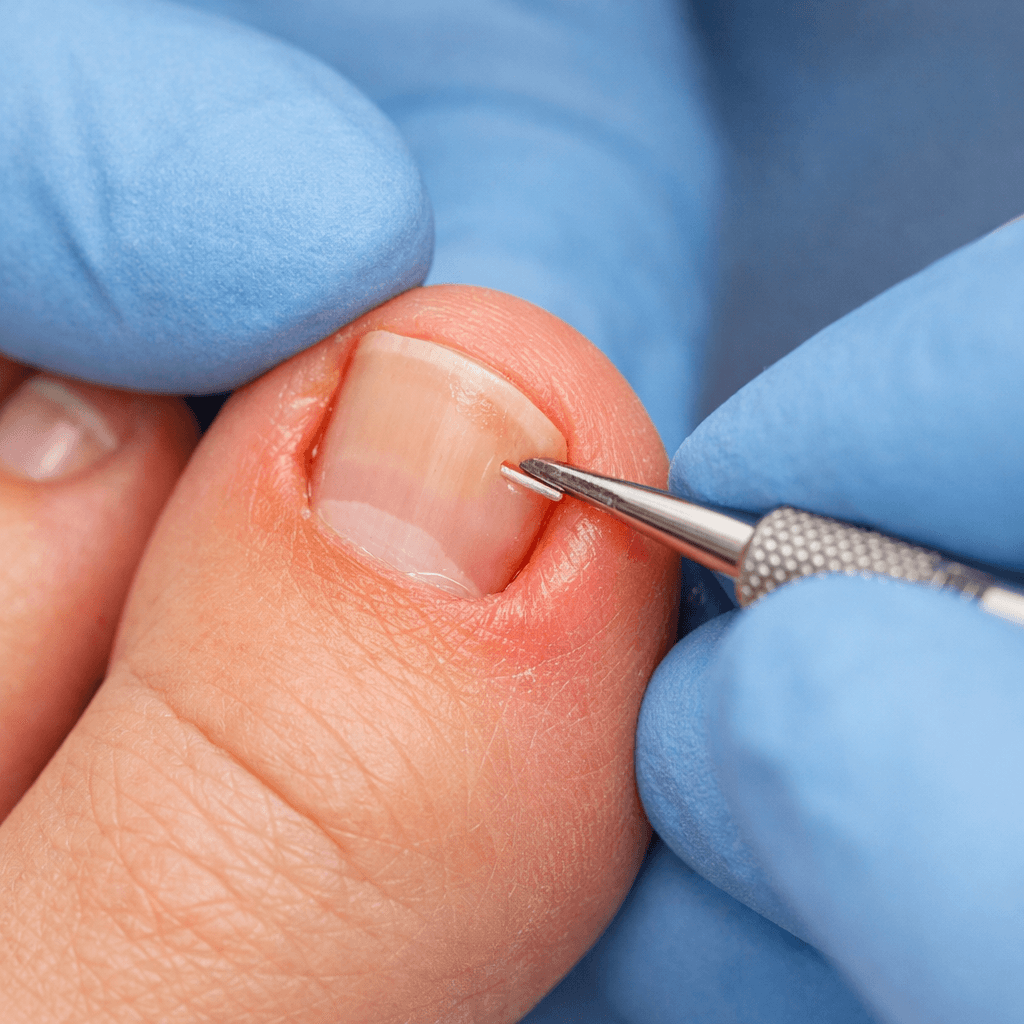
An ingrown nail (onychocryptosis) occurs when the lateral or medial nail edge penetrates the periungual skin. This results in localized inflammation and, in some cases, infection.
Clinical Features
Erythema
Edema
Localized tenderness
Drainage
Granulation tissue in chronic cases
Contributing Factors
Common risk factors include:
Improper nail trimming
Tight footwear
Nail plate curvature
Trauma
Hyperhidrosis
Thickened or dystrophic nails
Biomechanical pressure
Early identification is central to effective Ingrown Nail Management for Foot Care Nurses, particularly in clients with diabetes, peripheral vascular disease, or compromised immunity.
Staging and Clinical Progression
Ingrown nails are often described in stages to guide clinical reasoning:
Stage 1 – Mild Inflammation
Redness
Mild swelling
Discomfort with pressure
Stage 2 – Increased Inflammation or Local Infection
Drainage
Increased pain
Localized warmth
Possible granulation tissue
Stage 3 – Chronic or Recurrent Presentation
Persistent granulation tissue
Thickened nail folds
Repeated infection
Understanding progression supports appropriate Ingrown Nail Management for Foot Care Nurses and helps determine when conservative care remains appropriate versus when referral is indicated.
Ingrown Nail Management for Foot Care Nurses
Ingrown Nail Management for Foot Care Nurses begins with comprehensive assessment and risk stratification.
Health History Review
Nurses assess:
Diabetes status
Peripheral arterial disease
Neuropathy
Immunosuppression
Medication profile
Previous recurrence
Physical Assessment
Assessment may include:
Visual inspection of nail borders
Identification of spicules
Evaluation of granulation tissue
Signs of local or spreading infection
Skin integrity and moisture
Where appropriate and within scope, vascular and neurological screening may be performed.
Clear documentation is required. Nurses should align practice with provincial standards and review structured guidance through scope of practice education for foot care nurses.
Conservative Management Approaches
Many ingrown nails can be managed conservatively when identified early and when within nursing scope.
Common Interventions
Gentle nail edge reduction
Removal of visible nail spicules
Debridement of non-viable tissue (if within scope)
Smoothing sharp edges
Pressure redistribution techniques
Protective padding
Mechanical correction systems and composite nail braces may also be considered when appropriate and when the nurse has achieved competency through structured education.
Nurses seeking structured preparation can review foundational foot care nursing education to support safe skill acquisition.
Risk Stratification in Conservative Care
Not all ingrown nails are managed the same way. Nurses must consider:
Presence of neuropathy
Vascular status
Client’s ability to perform self-care
History of recurrent infection
Immune status
Clients with diabetes or peripheral arterial disease may require a more cautious approach and earlier referral.
Conservative Ingrown Nail Management for Foot Care Nurses focuses on reducing pressure, removing irritants, and supporting tissue healing while minimizing trauma.
Tools and Infection Prevention
Appropriate instrumentation is essential in Ingrown Nail Management for Foot Care Nurses.
Commonly Used Tools
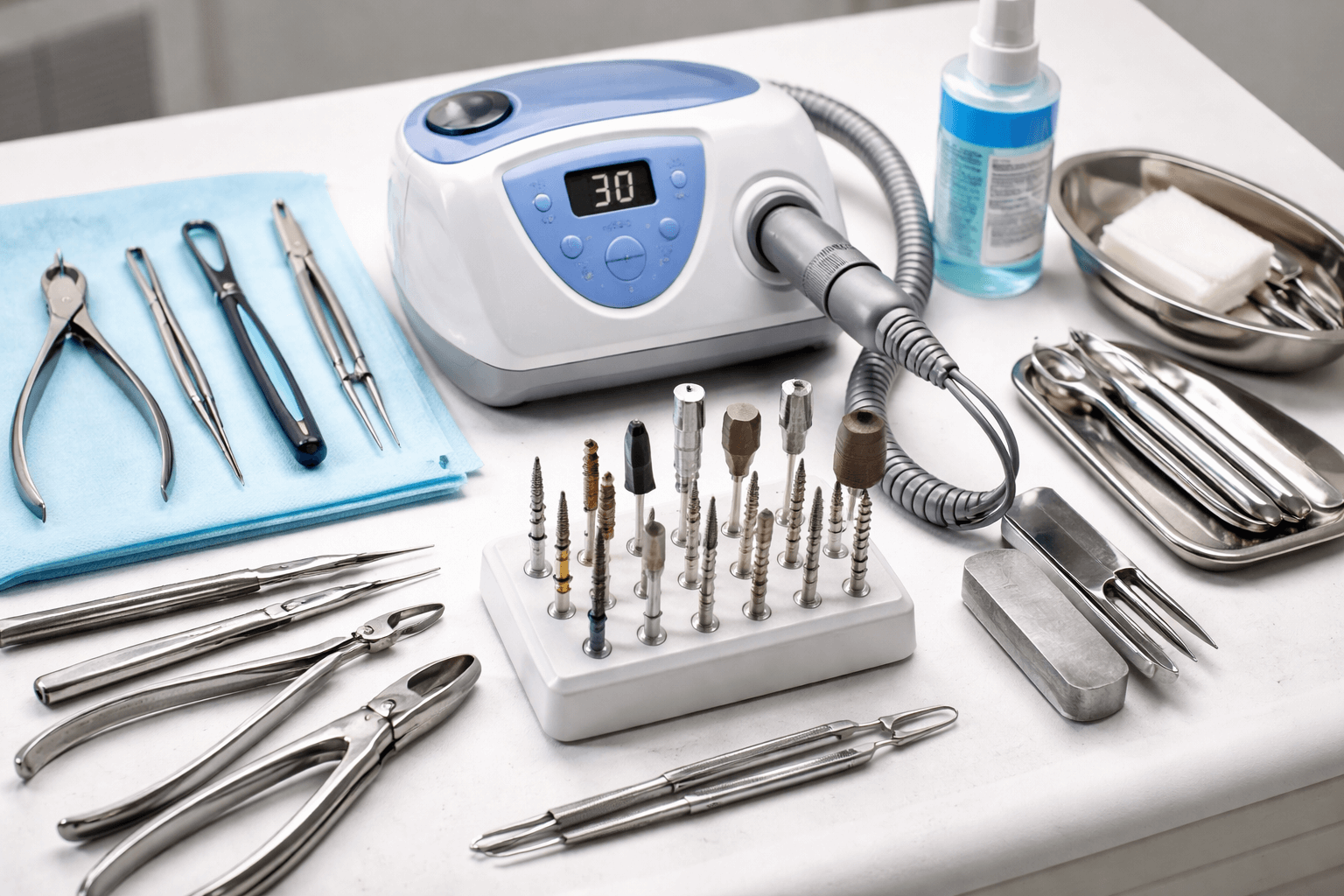
Fine nail elevators
Precision files
Diamond taper burs
Ingrown nail lifters
Composite resin systems
Safe technique includes controlled hand positioning, tissue protection, and maintaining clear visualization.
All reusable instruments must undergo validated reprocessing procedures consistent with Canadian infection prevention standards. Nurses should follow evidence-informed guidance such as infection prevention and medical device reprocessing education.
Failure to adhere to reprocessing standards places clients and practitioners at risk.
Client Education and Prevention
Prevention is a key component of Ingrown Nail Management for Foot Care Nurses.
Education should include:
Straight-across trimming technique
Avoiding aggressive corner-cutting
Wearing properly fitted footwear
Moisture management
Monitoring early signs of recurrence
Providing written aftercare instructions supports continuity of care.
Nurses can strengthen client teaching strategies through clinical skills and tools education resources designed for the Canadian foot care practice.
Scope of Practice and Referral
Ingrown Nail Management for Foot Care Nurses does not replace surgical care where indicated.
Referral may be required in cases of:
Spreading cellulitis
Suspected osteomyelitis
Severe vascular compromise
Recurrent cases requiring surgical intervention
Systemic symptoms
Education enhances competency but does not expand the regulated scope. Nurses must practise in accordance with provincial standards and employer policies.
Those transitioning into foot care practice may benefit from reviewing professional development and returning-to-practice education resources.
Common Misconceptions in Ingrown Nail Care
Misconception: All ingrown nails require surgical removal.
Many cases respond well to conservative nursing management when identified early.
Misconception: Cutting deeply into the corner prevents recurrence.
This often worsens the condition and increases infection risk.
Misconception: Ingrown nails are minor concerns.
In high-risk populations, complications can escalate quickly.
Misconception: Completing education automatically authorizes expanded procedures.
A certificate of completion confirms learning, not expanded scope.
Professional Insight from a Nursing Education Perspective
From a nursing education standpoint, Ingrown Nail Management for Foot Care Nurses involves more than technical intervention. It requires:
Clinical reasoning
Risk assessment
Ethical decision-making
Infection prevention compliance
Accurate documentation
Structured continuing education supports consistency and safety. Ongoing learning through the AFCN Learning Institute education hub allows nurses to maintain evidence-informed practice aligned with Canadian standards.
Key Takeaways
Ingrown Nail Management for Foot Care Nurses requires structured assessment and documentation.
Conservative interventions are often appropriate within a regulated scope.
Infection prevention and instrument reprocessing are essential.
Client education reduces recurrence and complications.
Scope of practice varies across Canada and must guide all clinical decisions.
Ethical Closing Statement
Ingrown Nail Management for Foot Care Nurses is a clinically significant aspect of foot care practice in Canada. Through structured assessment, conservative management, prevention education, and adherence to regulatory standards, nurses can provide safe and ethical care. Ongoing professional development supports competency, while the scope of practice and employer policies remain the foundation of responsible nursing practice.
https://www.afcnlearninginstitute.com/courses/foot-care-skills-workshop-series-ingrown-nails
FAQs
What is included in Ingrown Nail Management for Foot Care Nurses?
It includes assessment, conservative nail edge reduction, infection prevention, documentation, client education, and referral when indicated, within provincial scope of practice.
Can Canadian nurses surgically remove ingrown nails?
Surgical procedures depend on provincial regulations and employer authorization. Education alone does not grant surgical privileges.
How are ingrown nails prevented?
Prevention includes straight-across trimming, proper footwear, moisture control, and early assessment of discomfort.
Does completing education allow independent foot care practice?
A certificate of completion confirms education. Authorization to practise is determined by provincial regulatory standards and employer policies.