
Table of Contents
- Foundations of Skin Integrity in Foot Care
- Healthy Skin, Healthy Feet: Footlogix Solutions in Clinical Context
- Regulatory and Professional Considerations
- Addressing Common Misconceptions
- Integrating Healthy Skin, Healthy Feet: Footlogix Solutions into Continuing Education
- Supporting Mobility and Skin Health
- Key Takeaways
- Professional Closing Statement
- FAQs
Healthy Skin, Healthy Feet: Footlogix Solutions
Maintaining skin integrity is a foundational component of foot care nursing. Across community practice, long-term care, and independent nursing settings in Canada, skin assessment guides safe and appropriate intervention. Healthy Skin, Healthy Feet: Footlogix Solutions examines how structured assessment, evidence-informed product selection, and scope awareness support competent foot care nursing practice.
This article is educational in nature. Scope of practice varies by province, regulatory college, and employer policy. Completion of education results in a certificate of completion and does not authorize independent practice.
Foundations of Skin Integrity in Foot Care
Healthy foot skin performs several essential functions:
Acts as a protective barrier
Maintains moisture balance
Supports temperature regulation
Reduces risk of infection
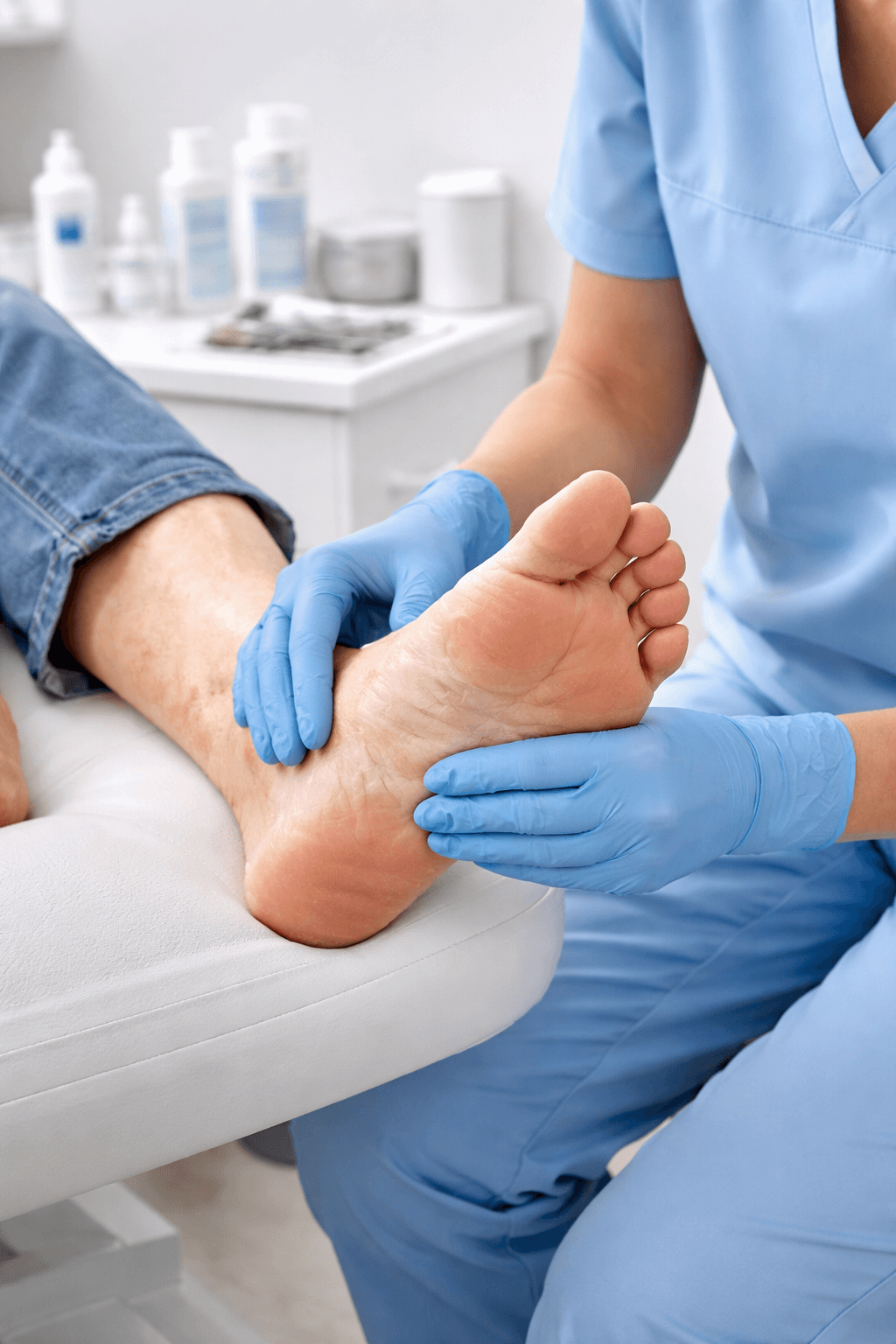
During a structured assessment, nurses evaluate:
Skin colour and perfusion indicators
Temperature differences
Texture and hydration level
Presence of callus or fissures
Signs of inflammation or infection
A systematic framework is reinforced through the AFCN Learning Institute education hub and foundational foot care nursing education programs.
Common conditions encountered include xerosis, hyperkeratosis, fissured heels, and moisture imbalance. Accurate differentiation is essential before recommending any topical product.
Healthy Skin, Healthy Feet: Footlogix Solutions in Clinical Context
When discussing Healthy Skin, Healthy Feet: Footlogix Solutions, the emphasis must remain on nursing assessment and clinical reasoning rather than product promotion. Foot-specific formulations are designed to address plantar skin physiology, which differs from other body areas.
Clinical decision-making should consider:
Client health history
Diabetes status
Vascular sufficiency
Neuropathy
Skin sensitivity
Medication profile
Product categories often used in foot care settings include:
| Skin Presentation | Clinical Objective | Product Category |
|---|---|---|
| Dry, flaky skin | Restore hydration | Moisturizing mousse |
| Thickened callus | Gradual softening | Urea-based formula |
| Cracked heels | Improve barrier function | Repair formulation |
| Mild superficial fungal symptoms | Support topical care | Antifungal topical |
Nurses must avoid diagnosing fungal infections unless authorized within provincial scope. Education in scope of practice for Canadian nurses supports safe implementation.
Regulatory and Professional Considerations
Scope of Practice in Canada
Each province regulates nursing practice independently. RNs, RPNs, and LPNs must:
Follow provincial standards
Practice within employer policies
Document assessment findings
Refer when indicated
Education related to Healthy Skin, Healthy Feet: Footlogix Solutions strengthens competence but does not expand scope beyond regulatory authorization.
Infection Prevention Standards
Skin care interventions must align with infection control requirements, including:
Hand hygiene
Clean field preparation
Proper instrument reprocessing
Safe disposal of single-use materials
Structured training in infection prevention and medical device reprocessing supports risk reduction.
Ethical Product Communication
When recommending products, nurses should:
Use neutral language
Avoid curative claims
Clarify limitations of topical care
Encourage medical evaluation when red flags appear
Professional education emphasizes client-centred communication within regulated nursing frameworks.
Addressing Common Misconceptions
Several misunderstandings arise in foot skin care practice.
Misconception: All dry skin is the same.
Dryness may result from aging, systemic illness, environmental exposure, or mechanical stress.
Misconception: Foot care is cosmetic.
In nursing practice, maintaining skin integrity reduces fissure risk, infection potential, and discomfort that may impair mobility.
Misconception: Product knowledge equals authority to practise independently.
Learning about Healthy Skin, Healthy Feet: Footlogix Solutions does not grant independent clinical authority.
Misconception: Over-the-counter means risk-free.
Even non-prescription products require assessment-based selection.
Integrating Healthy Skin, Healthy Feet: Footlogix Solutions into Continuing Education
Continuing competence is required across Canadian regulatory bodies. Education related to Healthy Skin, Healthy Feet: Footlogix Solutions can enhance:
Assessment accuracy
Documentation practices
Client teaching strategies
Recognition of referral indicators
Professional development pathways include:
Structured continuing competence planning
When integrated appropriately, knowledge of Healthy Skin, Healthy Feet: Footlogix Solutions supports a broader framework of ethical nursing practice grounded in safety and regulation.
Supporting Mobility and Skin Health
Healthy plantar skin contributes to:
Reduced fissure formation
Lower infection risk
Improved tolerance to footwear
Enhanced mobility
Clients with diabetes, peripheral vascular disease, or neuropathy require additional vigilance. Nurses should collaborate interprofessionally when assessment findings suggest elevated risk.
Clients living with diabetes, peripheral arterial disease, or reduced sensation require enhanced vigilance during skin assessment. Even minor fissures or areas of dryness may progress more quickly in the presence of impaired circulation or neuropathy. Nurses should assess risk factors carefully and document findings that may indicate the need for referral to a physician or nurse practitioner. Early identification of skin compromise supports timely intervention and reduces the likelihood of secondary complications.
Thorough documentation is an essential component of professional foot care nursing. Records should reflect assessment findings, rationale for product selection, client tolerance, and any follow-up recommendations. Documenting changes in skin condition over time allows nurses to evaluate response to intervention and adjust care plans appropriately. Clear charting also supports regulatory compliance and continuity of care across interprofessional teams.
Client education strengthens outcomes and promotes shared responsibility for skin health. Nurses can teach clients how to perform daily visual inspection, apply moisturizers appropriately, and avoid excessive mechanical friction. Guidance regarding properly fitting footwear and moisture management further supports skin integrity. Clients should also be informed about warning signs that warrant medical assessment, including increased redness, drainage, swelling, or delayed healing.
Ongoing evaluation is also important in maintaining skin integrity over time. Nurses should reassess hydration levels, callus formation, and client adherence to recommended care routines at each visit. Small changes in skin texture or colour may signal evolving concerns that require modification of the care plan. Consistent follow-up reinforces preventive care principles and supports long-term foot health outcomes.
By approaching foot care systematically, Healthy Skin, Healthy Feet: Footlogix Solutions becomes part of a comprehensive nursing framework that includes assessment, documentation, education, and referral.
Key Takeaways
Structured skin assessment guides safe product recommendation.
Scope of practice varies by province and employer.
Education provides a certificate of completion, not independent authorization.
Infection prevention principles apply to all foot care interventions.
Maintaining skin integrity supports mobility and quality of life.
Professional Closing Statement
Healthy Skin, Healthy Feet: Footlogix Solutions should be viewed within the regulated context of Canadian nursing practice. Product knowledge enhances clinical reasoning when combined with assessment skill, ethical communication, and adherence to provincial standards. Nurses are encouraged to pursue continuing education that strengthens competence while respecting professional boundaries.
https://www.afcnlearninginstitute.com/courses/unlocking-footlogix-solutions
FAQs
Can Canadian nurses recommend Footlogix products?
Yes, if recommendation falls within provincial scope and employer policy. Nurses must avoid diagnosis unless authorized.
Does completing a foot care course allow independent practice?
No. Nurses receive a certificate of completion. Authorization to practise is determined by regulatory colleges.
What is the primary goal of foot skin assessment?
To identify risk factors, maintain skin integrity, and determine whether referral is required.
Why is documentation important in foot care nursing?
Accurate documentation supports continuity of care, regulatory compliance, and risk management.