
Table of Contents
- How to Become a Foot Care Nurse in Ontario: Education and Accountability
- What Is a Foot Care Nurse?
- Step 1: Confirm Your Nursing Registration and Practice Responsibilities
- Step 2: Choose Foot Care Education With Clear Learning Outcomes
- Step 3: Understand the Supervised Clinical Component
- Step 4: Prepare for Practice After Course Completion
- Common Misconceptions About Foot Care Nursing
- Educator Insight: Connecting Theory With Clinical Learning
- Key Takeaways
- Explore AFCN Training
- FAQs
How to Become a Foot Care Nurse in Ontario: Education and Accountability
For nurses exploring how to become a foot care nurse in Ontario, the pathway involves nursing registration, additional education, supervised clinical learning, and preparation for practice.
These stages serve different purposes. Nursing registration establishes professional status, while foot care education develops additional knowledge and clinical skills. Completing a course does not automatically authorize every procedure or establish readiness for every clinical situation.
This guide focuses on the Ontario pathway for nurses registered with the College of Nurses of Ontario (CNO). Nurses practising elsewhere in Canada should consult their own provincial or territorial regulator.
What Is a Foot Care Nurse?
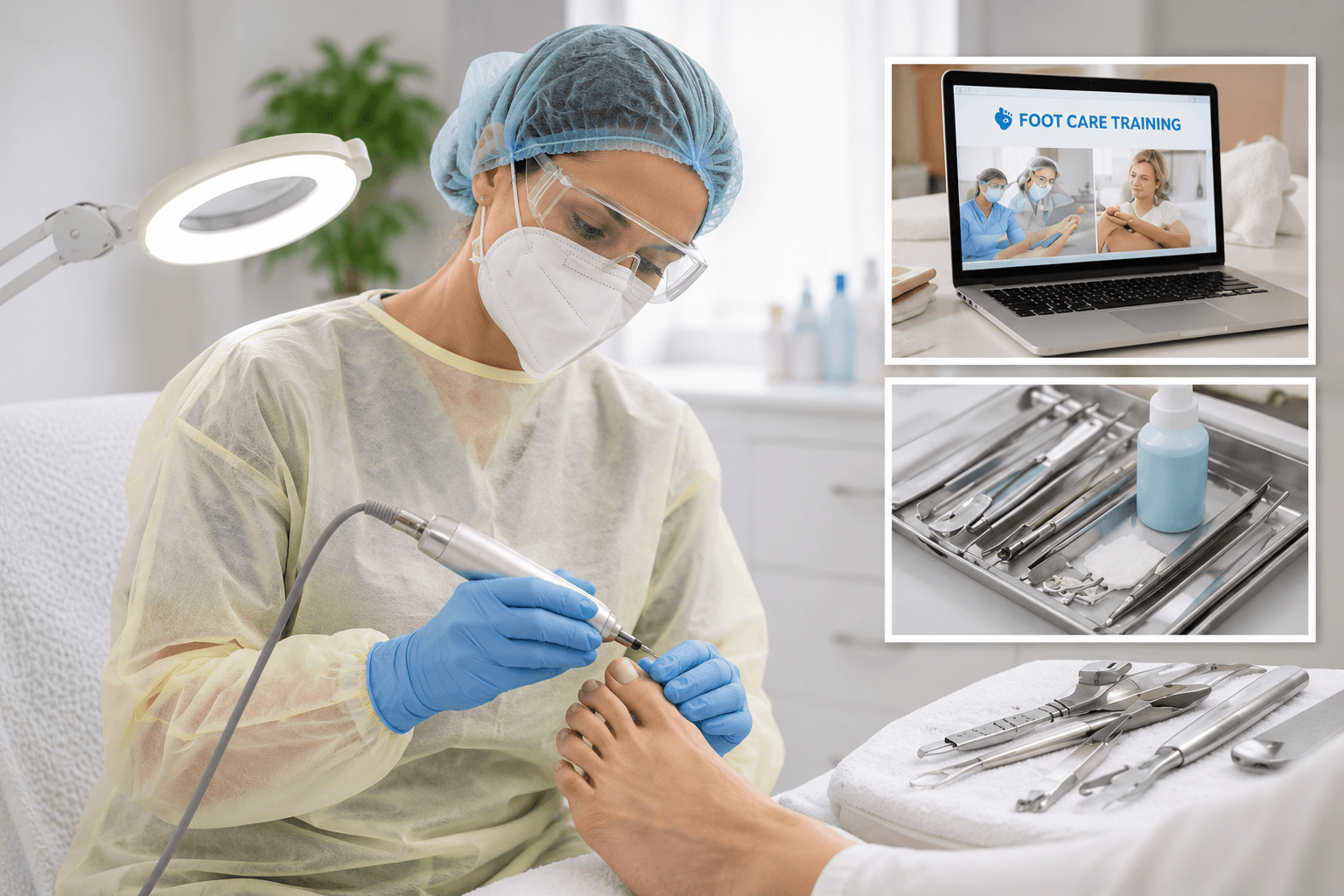
Foot care nursing focuses on foot and lower limb health through assessment, prevention, care, client education, and collaboration.
Depending on the nurse’s preparation and practice responsibilities, this work may involve:
- Assessing foot and lower limb health.
- Identifying concerns requiring further assessment or referral.
- Providing appropriate nail and skin care.
- Supporting clients with prevention and self-care education.
- Collaborating with other healthcare professionals.
These examples describe areas of practice rather than a list of procedures every nurse or course graduate is authorized to perform.
The Canadian Association of Foot Care Nurses’ 2025 Competency Framework describes advanced foot care nursing in Canada and provides a reference for evaluating educational content. National competencies should be considered alongside the requirements of the nurse’s own regulator.
Step 1: Confirm Your Nursing Registration and Practice Responsibilities
Ontario nursing designations include Registered Nurse (RN), Registered Practical Nurse (RPN), and Nurse Practitioner (NP).
CNO’s Classes of Registration explains the different registration classes, including those that permit practice and the Non-Practising Class. Before planning a foot care nursing role, confirm your registration status and any applicable terms, conditions, or limitations.
If you are applying from another jurisdiction or have a different registration circumstance, seek current guidance directly from CNO.
The CNO Scope of Practice standard identifies three considerations when deciding whether to perform an activity:
- Authority: Whether the necessary legal authority and authorizing mechanisms are in place.
- Context: Whether the setting and available resources support safe care.
- Competence: Whether the nurse has the required knowledge, skill, and judgment.
Additional education supports competence, but it does not replace the other requirements.
Nurses must also ensure their professional liability protection meets CNO requirements and covers their nursing practice.
Step 2: Choose Foot Care Education With Clear Learning Outcomes
When comparing programs, look beyond the course title. Review the curriculum, supervision arrangements, assessment methods, and completion requirements.
Useful questions include:
- How does the program teach foot and lower limb assessment?
- What learning addresses diabetes, skin and nail conditions, and other factors affecting foot health?
- How are clinical reasoning, consultation, and referral addressed?
- What education covers consent, documentation, and professional accountability?
- How are infection prevention and medical device reprocessing taught?
- What opportunities are available for supervised practice and feedback?
- What must students demonstrate to complete the program?
The CAFCN competency framework can help prospective students examine a program’s educational coverage. Referencing a framework does not, by itself, establish accreditation or endorsement of a particular provider.
Infection Prevention and Medical Device Reprocessing
General infection-prevention education and device-reprocessing education should be clearly identified within a program.
Public Health Ontario’s reprocessing resources address cleaning, disinfection, and sterilization of reusable medical equipment and devices.
For foot-care-specific recommendations, IPAC Canada publishes the Reprocessing of Critical Foot Care Devices in Healthcare Settings position statement.
These resources help readers understand the subject and evaluate educational coverage. This article does not provide reprocessing instructions or replace practical training, applicable requirements, or device-specific manufacturer instructions.
Step 3: Understand the Supervised Clinical Component
When selecting a program, ask how clinical learning connects theory with observed practice.
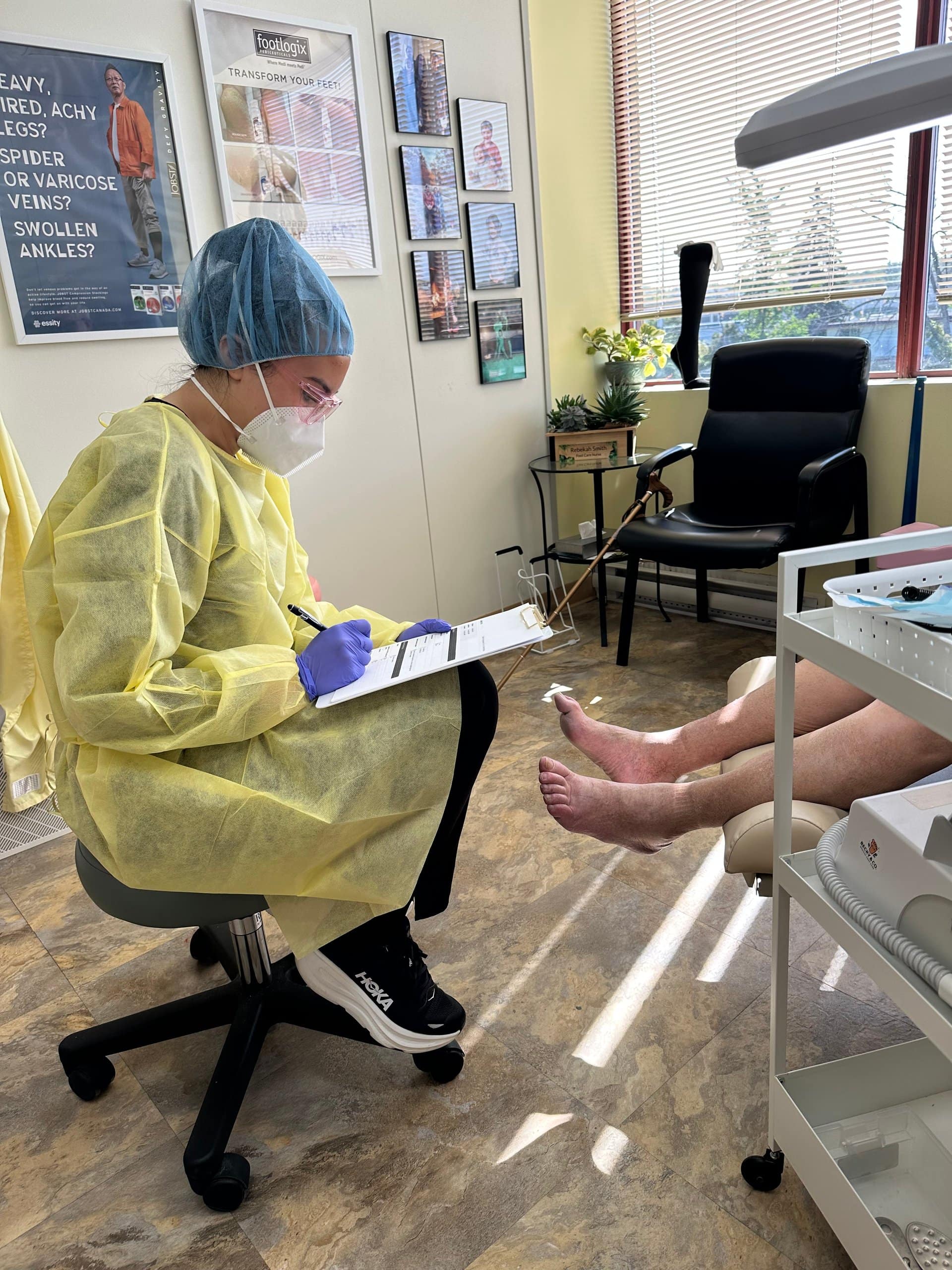
Find out who supervises students, which skills are evaluated, how feedback is provided, and what happens if further learning is needed. Confirm clinical arrangements before making travel or scheduling commitments.
AFCN Learning Institute’s Program
AFCN’s Advanced Foot Care Nurse Course combines self-paced online theory with three days of in-person clinical training.
The published program includes:
- 110 hours of online theory.
- Approximately 24 hours of clinical training over three days.
- 134 educational hours in total.
- Completion of both theory and clinical requirements within one year.
- A Certificate of Completion after the program requirements are met.
These are AFCN program requirements. They should not be interpreted as a statement that Ontario requires every foot care nurse to complete this particular course or number of hours.
AFCN’s published information describes assessment through course completion and a clinical evaluation by the educator, rather than a formal written final examination.
Admission and Clinical Arrangements
AFCN accepts eligible nurses with an active licence in good standing and nursing students currently enrolled in an accredited nursing program with proof of enrolment.
Course admission is separate from authorization to practise nursing. Nursing students should confirm the requirements applicable to their clinical participation directly with AFCN.
The course page lists Ontario clinical partners and their locations. Students receive information about clinical partners and contact a partner to arrange their clinical dates.
Additional clinical training is available for learners seeking more supervised experience. Students who anticipate difficulty meeting the one-year completion requirement should contact AFCN early; extensions are considered individually and are not guaranteed.
See AFCN’s course and clinical training questions for further information.
Step 4: Prepare for Practice After Course Completion
Completing a course provides an opportunity to review readiness for the intended role and setting.
Preparation should include:
- Documentation and secure information-management processes.
- Consent and intake processes.
- Infection-prevention and reprocessing arrangements.
- Equipment selection, maintenance, and storage.
- Professional liability protection.
- Referral relationships and access to further learning or support.
The CNO Documentation standard addresses nursing records and information security. The CNO Consent guideline explains consent-related responsibilities.
Nurses considering self-employment should also review the CNO Independent Practice guideline. Operating a nursing business involves professional and business responsibilities beyond completing a course or purchasing equipment.
Common Misconceptions About Foot Care Nursing
“A course certificate permits every procedure taught.”
AFCN’s Certificate of Completion records completion of its program requirements. It does not replace professional accountability or the requirements applicable to a particular activity.
“A national competency framework establishes identical rules across Canada.”
National educational guidance and provincial or territorial regulation serve different purposes. Ontario-specific practice questions should be checked against Ontario requirements.
“A published clinical location guarantees a placement.”
Confirm the location, dates, and availability directly with the education provider or clinical partner.
“Completing theory means practical learning is finished.”
AFCN’s program includes both theory and clinical requirements. Prospective students should understand how practical learning is evaluated and what support is available when further development is needed.
Educator Insight: Connecting Theory With Clinical Learning
The following perspective is contributed by Janis Boudreau, RPN, nurse educator and founder of AFCN Learning Institute, and reflects her teaching approach.
The Misconception: “If I’ve Passed the Theory, I’m Ready for Clients.”
Many prospective students believe that finishing the coursework means they're ready to practise independently. Theory gives you the knowledge: anatomy, diabetic and circulatory risk factors, IPAC principles, and your scope of practice as a nurse in Ontario. Readiness is something different. It's the ability to apply that knowledge with steady hands, sound judgment, and calm confidence on a real person's feet.
Supervised clinical learning is where you show that you can:
- Handle instruments safely and confidently
- Recognize what's normal and what needs to be escalated or referred
- Follow reprocessing and infection control steps every time, not just when you're being watched
- Communicate with clients, especially older adults and those with diabetes
- Document clearly and completely
You can score well on an exam and still need repetition before these skills feel natural. That isn't a failure. It's how clinical competence is built.
How We Help Learners Recognize When They Need More Practice
We make self-awareness a skill we teach, not something students are left to guess at:
- Competency checklists: Learners are signed off on specific skills, not just on time spent, so gaps are visible rather than vague.
- Observed practice with direct feedback: Mentors give concrete, timely input, not just a pass or fail.
- Guided reflection: After each session, learners ask themselves what felt confident, what felt hesitant, and what they'd do differently.
- Clear signals: Hesitation with instruments, skipped or rushed IPAC steps, uncertainty about when to refer, or incomplete documentation all point to a need for more practice.
- A culture where asking is strength: Saying "I'd like more supervised practice" is what safe, accountable nursing looks like. Clients deserve nurses who know their limits, and the best foot care nurses never stop reflecting on their practice.
Our goal isn't to rush you through. It's to make sure that when you step out on your own, you're not just qualified on paper but ready in practice.
Key Takeaways
- Nursing registration, additional education, supervised learning, and readiness for practice are distinct.
- Ontario-specific regulatory guidance should come from CNO.
- Compare programs by their curriculum, supervision, assessment, and completion requirements.
- AFCN’s published program combines online theory with three days of in-person clinical training.
- A Certificate of Completion does not replace professional accountability.
Explore AFCN Training
To review admission requirements, course content, and clinical arrangements, visit the AFCN Advanced Foot Care Nurse Course.
Use this information to discuss whether the program fits your learning needs and intended practice setting.
https://www.afcnlearninginstitute.com/courses/advancedfootcarenursecourse
FAQs
Is foot care nursing regulated in Ontario?
Yes. Foot care nursing is regulated through the nurse’s existing registration with the College of Nurses of Ontario. There is no separate foot care licence.
Do I need certification to become a Foot Care Nurse in Ontario?
No. Nurses complete continuing education and receive a certificate of completion, not certification or authorization to practise.
Can RPNs provide foot care in Ontario?
Yes. RPNs may provide foot care within their individual scope of practice, competence, employer policies, and regulatory standards.
Does foot care education allow independent practice?
Education alone does not authorize independent practice. Nurses must meet regulatory, insurance, and professional requirements before offering services independently.