
Table of Contents
- What Is Advanced Foot Care Nurse Hands-On Clinical Training?
- Prerequisites for Enrollment
- What Skills Are Developed During Clinical Training?
- Professional Considerations in Canada
- Common Misconceptions About Clinical Training
- The Role of Structured Clinical Experience
- What Nurses Receive Upon Completion
- Why Hands-On Clinical Training Matters
- Key Takeaways
- FAQs
Advanced Foot Care Nurse Hands-On Clinical Training
Advanced Foot Care Nurse Hands-On Clinical Training provides licensed Canadian nurses with structured clinical experience in foot care practice after completion of a recognized theory program. For nurses seeking to strengthen their applied skills, clinical confidence, and professional judgment in foot care settings, hands-on education is a critical step in competency development.
In Canada, education supports competence — but authorization to practise always depends on provincial scope of practice and employer policy. Clinical training enhances readiness while reinforcing infection prevention, assessment standards, and ethical practice.
This article explains what Advanced Foot Care Nurse Hands-On Clinical Training includes, who it is designed for, and what nurses should consider before enrolling.
What Is Advanced Foot Care Nurse Hands-On Clinical Training?
Advanced Foot Care Nurse Hands-On Clinical Training is a structured clinical component designed for nurses who have already completed a recognized foot care theory program.
It focuses on:
Practical skill refinement
Clinical decision-making
Sterilization and reprocessing standards
Equipment handling
Client assessment
Documentation and consent processes
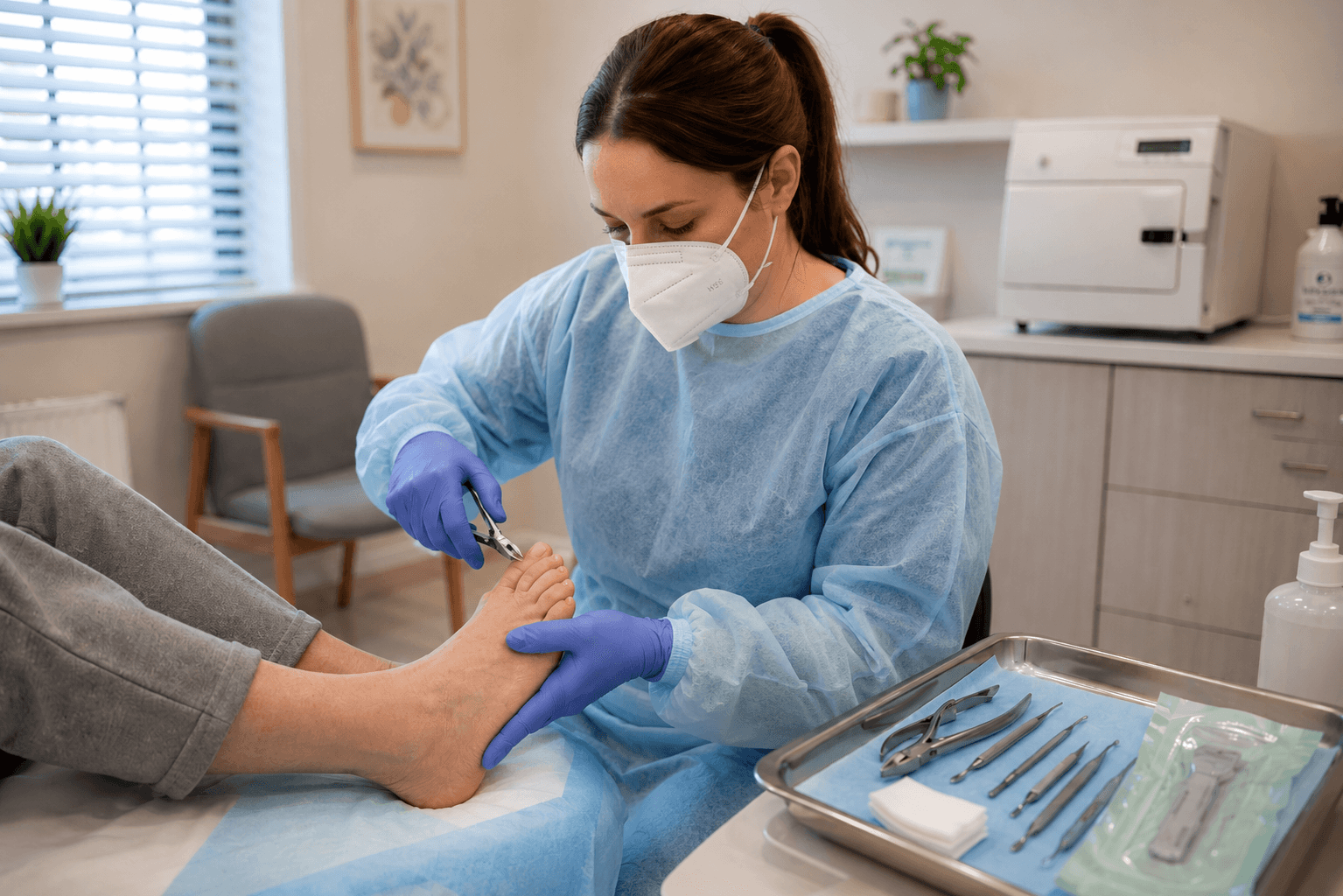
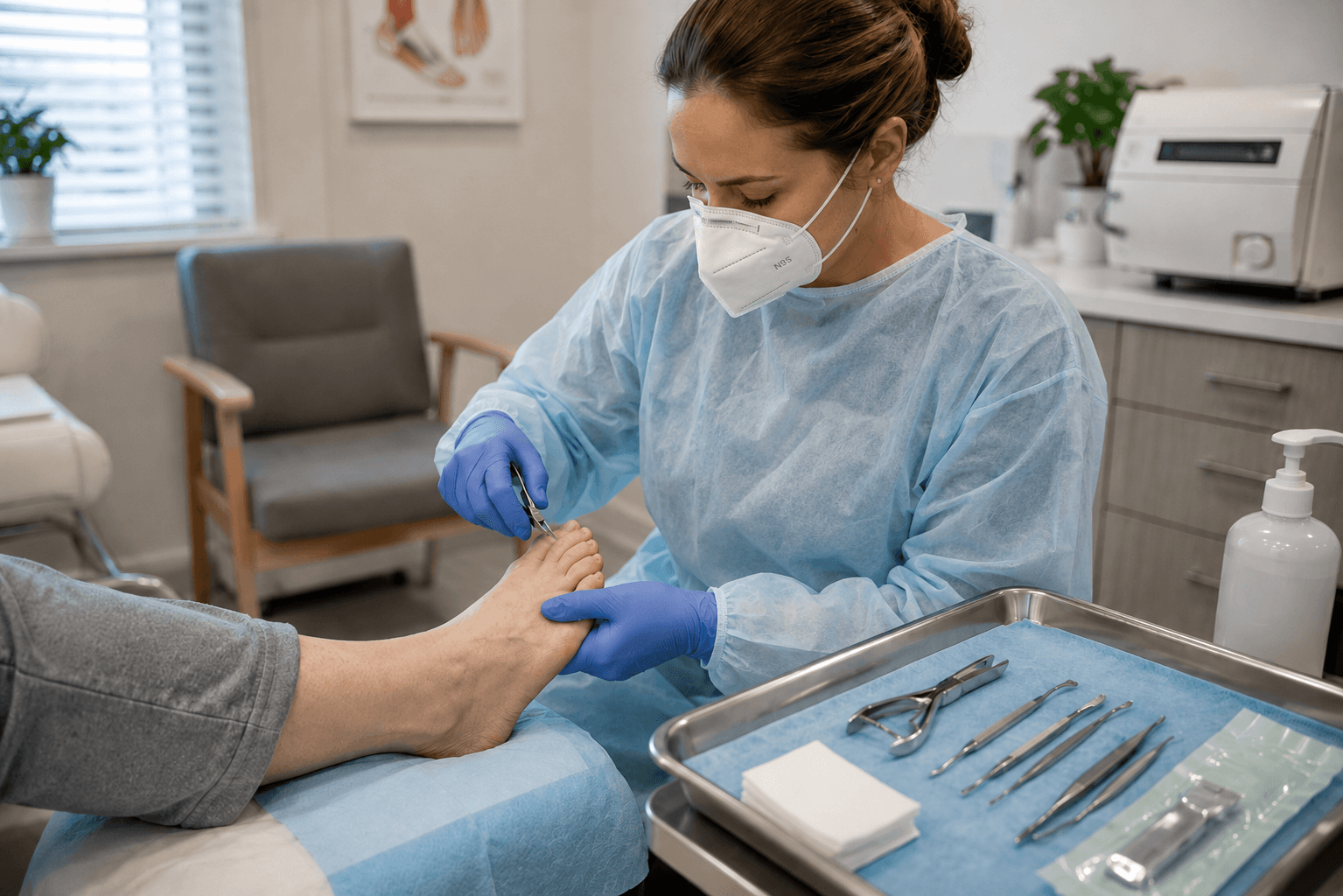
Unlike theoretical education, clinical training emphasizes direct supervision, real-world workflow, and applied infection control procedures in active care environments.
At AFCN Learning Institute, this component includes three days of supervised clinical experience in a busy foot care setting and/or facility environment, along with dedicated exposure to sterilization and reprocessing protocols.
Prerequisites for Enrollment
To participate in Advanced Foot Care Nurse Hands-On Clinical Training, nurses must have successfully completed a recognized Foot Care Nurse theory program.
Examples of recognized theory pathways may include:
Independent foot care nursing programs
College-based foot care education
Established Canadian foot care nursing educators
Education alone does not grant an expanded scope of practice. Nurses remain accountable to:
Their provincial regulatory body
Employer policies
National competency frameworks
For nurses reviewing scope considerations, AFCN provides educational guidance through its scope of practice education resources and discussion of the College of Nurses and independent practice considerations.
What Skills Are Developed During Clinical Training?
Clinical training bridges theory and practice. During Advanced Foot Care Nurse Hands-On Clinical Training, nurses typically strengthen competence in the following areas:
Infection Prevention and Reprocessing
Medical device cleaning and sterilization workflow
Use of personal protective equipment (PPE)
Environmental disinfection
Linen handling
Safe instrument storage
A dedicated sterilization session reinforces principles aligned with infection prevention and medical device reprocessing standards.
Equipment and Tool Proficiency
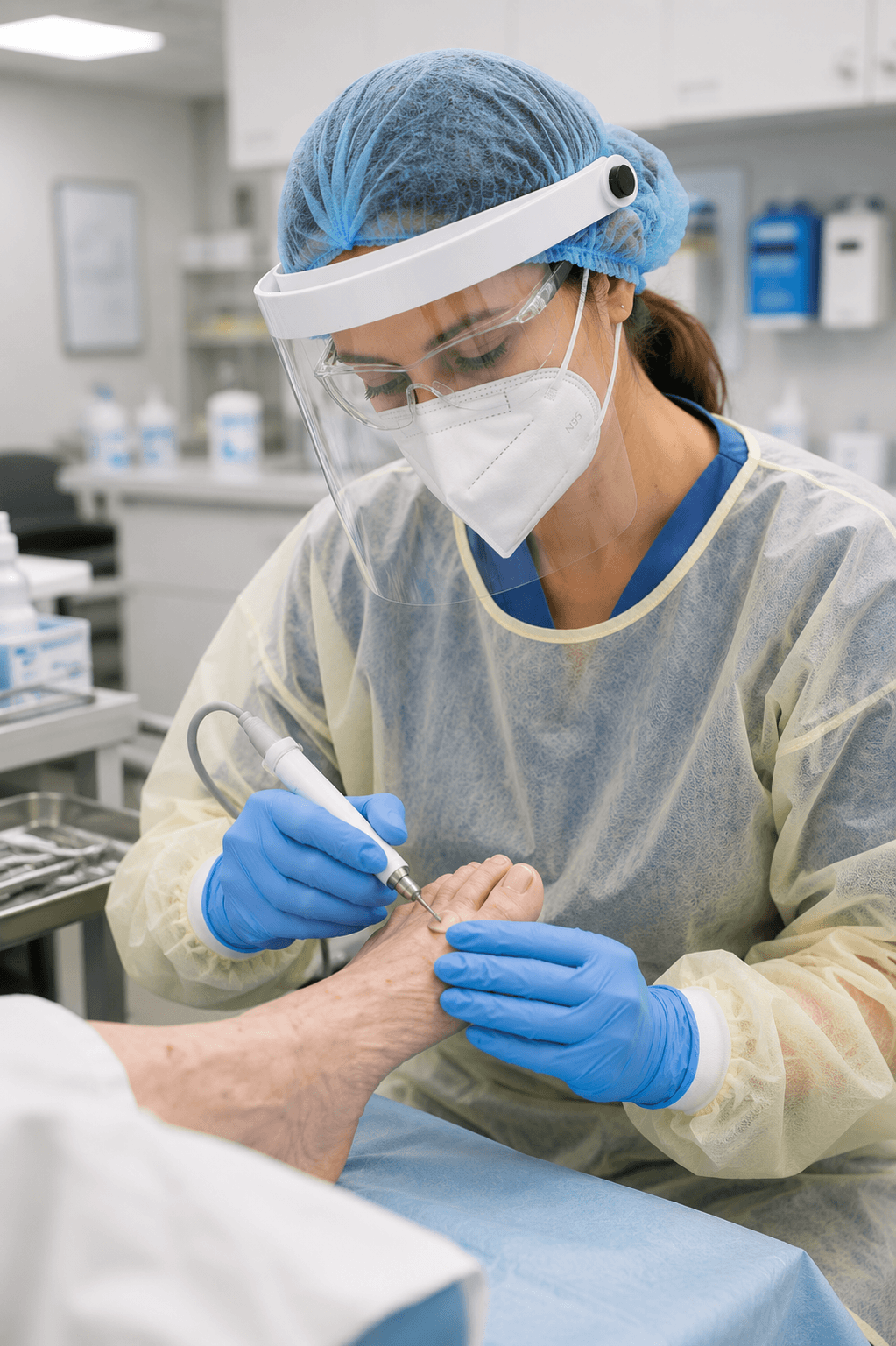
Podiatry drill and burr handling
Equipment safety checks
Diabetic onychomycosis (fungal nail) tool use
Corn and callus reduction techniques
Ingrown nail management principles
Hands-on repetition improves control, safety, and ergonomic awareness.
Client Assessment and Care Planning
Comprehensive clinical foot assessment
Gait analysis fundamentals
Diabetic foot considerations
Offloading product education
Compression sock measuring
Custom footwear measuring basics
Assessment skills are central to safe foot care nursing. Clinical education reinforces how assessment findings inform appropriate care within scope.
Documentation and Professional Standards
Consent processes
Charting standards
Patient education strategies
Supply management and clinic workflow setup
Nurses are reminded that documentation must align with provincial regulatory expectations and employer requirements.
Professional Considerations in Canada
Scope of Practice
Foot care nursing falls within the general nursing scope when performed competently and in accordance with regulatory standards. However:
The scope varies by province
Employer policies may restrict certain procedures
Independent practice has additional considerations
A certificate of completion confirms education — it does not authorize independent practice.
Nurses are encouraged to review the CAFCN National Competencies and provincial regulatory guidance before integrating advanced skills into practice.
Safety and Ethical Responsibility
Advanced Foot Care Nurse Hands-On Clinical Training emphasizes:
Risk identification
Client selection
Referral recognition
Maintenance of professional boundaries
Nurses must recognize when findings fall outside the nursing scope and require referral to a physician, nurse practitioner, or podiatric specialist.
Ethical care includes:
Informed consent
Cultural sensitivity
Privacy protection
Accurate representation of credentials
Common Misconceptions About Clinical Training
Misconception 1: Clinical hours automatically authorize advanced procedures.
Education enhances competence but does not override regulatory limits.
Misconception 2: Theory is sufficient for safe advanced foot care.
Without supervised application, technical errors and infection control gaps may occur.
Misconception 3: All provinces interpret the scope the same way.
Regulatory language varies across Canada. Nurses must verify expectations locally.
Misconception 4: Equipment skill equals clinical competence.
Assessment, judgment, documentation, and referral decision-making are equally essential.
The Role of Structured Clinical Experience
Clinical education provides more than technical exposure. It allows nurses to:
Integrate infection control into the real workflow
Practice time management in active settings
Refine ergonomic positioning
Develop confidence using drills and burr systems
Observe experienced nurses managing complex presentations
Through foundational foot care nursing education and continued clinical skills and tools education, nurses progressively build safe practice habits.
For nurses returning to practice or transitioning specialties, structured clinical components can also support re-entry confidence alongside broader professional development education resources.
What Nurses Receive Upon Completion
Upon successful completion of both:
Recognized theory education (Module 1)
Advanced Foot Care Nurse Hands-On Clinical Training (Module 2)
Participants receive a Certificate of Completion as an Advanced Foot Care Nurse.
This document confirms educational achievement. It does not confer certification, licensure change, or automatic independent practice authority.
The program includes:
24 credited clinical educational hours
Three days of supervised experience
Sterilization training exposure
Access to professional peer networking
Why Hands-On Clinical Training Matters
In foot care nursing, small technical variations can influence:
Client comfort
Tissue integrity
Infection risk
Professional credibility
Supervised clinical repetition strengthens:
Precision
Infection control adherence
Assessment consistency
Documentation accuracy
For nurses expanding their practice area, structured clinical learning supports safe integration into patient care environments.
Key Takeaways
Advanced Foot Care Nurse Hands-On Clinical Training builds applied competence after theory education.
Clinical education strengthens infection prevention, assessment, and documentation skills.
The scope of practice varies across Canadian provinces and employers.
A certificate of completion confirms education but does not grant authorization to practise independently.
Structured clinical exposure supports safe, ethical integration of advanced foot care skills.
Advanced Foot Care Nurse Hands-On Clinical Training is an educational pathway designed to strengthen competence, reinforce safety, and support professional accountability in Canadian nursing practice. Nurses considering this step should review their regulatory standards and ensure alignment with employer expectations before integrating advanced skills into care delivery.
https://www.afcnlearninginstitute.com/courses/footcarenurseclinical
FAQs
What is Advanced Foot Care Nurse Hands-On Clinical Training?
Advanced Foot Care Nurse Hands-On Clinical Training is a supervised clinical education component for Canadian nurses who have completed a recognized foot care theory program and want structured practical experience.
Does a certificate of completion allow independent foot care practice?
No. A certificate of completion confirms education. Authorization to practise depends on provincial scope of practice, regulatory standards, and employer policy.
How many clinical hours are included?
This program includes 24 credited clinical educational hours delivered over three supervised training days.
Do I need to complete theory before enrolling?
Yes. Nurses must have successfully completed a recognized Foot Care Nurse theory program before participating in Advanced Foot Care Nurse Hands-On Clinical Training.