
Table of Contents
- Introduction
- Understanding Corns and Calluses
- Why Specialized Foot Care Training Matters
- What Is a Foot Care Skills Workshop for Callus and Corn Treatment?
- Who Can Benefit From a Foot Care Skills Workshop for Callus and Corn Treatment?
- Safety, Risk Assessment, and Scope of Practice in Canada
- Professional Insight From a Nursing Education Perspective
- Key Takeaways
- Ethical Closing Statement
- FAQs
Introduction
A Foot Care Skills Workshop for Callus and Corn Treatment provides structured, evidence-informed education for healthcare professionals who manage common foot conditions as part of routine clinical care. Foot health plays a critical role in mobility, comfort, and overall quality of life—particularly for older adults, people living with diabetes, and individuals with limited mobility.
A Foot Care Skills Workshop for Callus and Corn Treatment focuses on the safe, ethical, and conservative management of corns, calluses, and related hyperkeratotic conditions using sharps within the professional scope of practice. While these conditions are often perceived as minor, improper or unskilled management may increase the risk of pain, infection, skin breakdown, and delayed healing.
For nurses and other regulated healthcare professionals in Canada, participation in a Foot Care Skills Workshop for Callus and Corn Treatment supports clinical competence, safety awareness, and professional accountability when providing non-surgical foot care.
Understanding Corns and Calluses
Corns and calluses are among the most frequently encountered conditions addressed in a Foot Care Skills Workshop for Callus and Corn Treatment. Both develop as protective responses to repeated pressure or friction, yet they differ in structure, location, and management approach.
Calluses are broad, diffuse areas of thickened skin that typically form on weight-bearing surfaces such as the heels or balls of the feet.
Corns are smaller, more localized lesions with a defined central core. They most often appear on toes or areas exposed to ongoing shoe pressure.
Without appropriate care, corns and calluses may become painful and contribute to altered gait, fissuring, ulceration, or secondary infection. These risks are heightened in individuals with diabetes, peripheral vascular disease, neuropathy, or compromised skin integrity.
A Foot Care Skills Workshop for Callus and Corn Treatment teaches learners how to recognize these differences and apply appropriate, conservative interventions.
Why Specialized Foot Care Training Matters
Participation in a Foot Care Skills Workshop for Callus and Corn Treatment is essential because routine foot hygiene alone is not sufficient for managing advanced hyperkeratosis. The use of sharps such as scalpels and blades requires precise technique, sound clinical judgment, and an in-depth understanding of risk factors.
Specialized training emphasizes:
Functional anatomy of the foot
Skin pathology and wound-healing principles
Indications and contraindications for sharps use
Infection prevention and medical reprocessing
Client assessment and risk stratification
Ethical decision-making and documentation standards
Without appropriate education, sharps-based foot care can increase the risk of skin injury, bleeding, infection, and professional liability. A Foot Care Skills Workshop for Callus and Corn Treatment helps mitigate these risks through structured, standardized learning.
What Is a Foot Care Skills Workshop for Callus and Corn Treatment?
A Foot Care Skills Workshop for Callus and Corn Treatment is an educational program focused on conservative, non-surgical foot care techniques. These workshops may be delivered in online, in-person, or blended formats and are designed for regulated healthcare professionals.
Core Learning Topics
A Foot Care Skills Workshop for Callus and Corn Treatment typically covers:
Anatomy and physiology of the foot
Identification and classification of corns and calluses
Indications and contraindications for sharps use
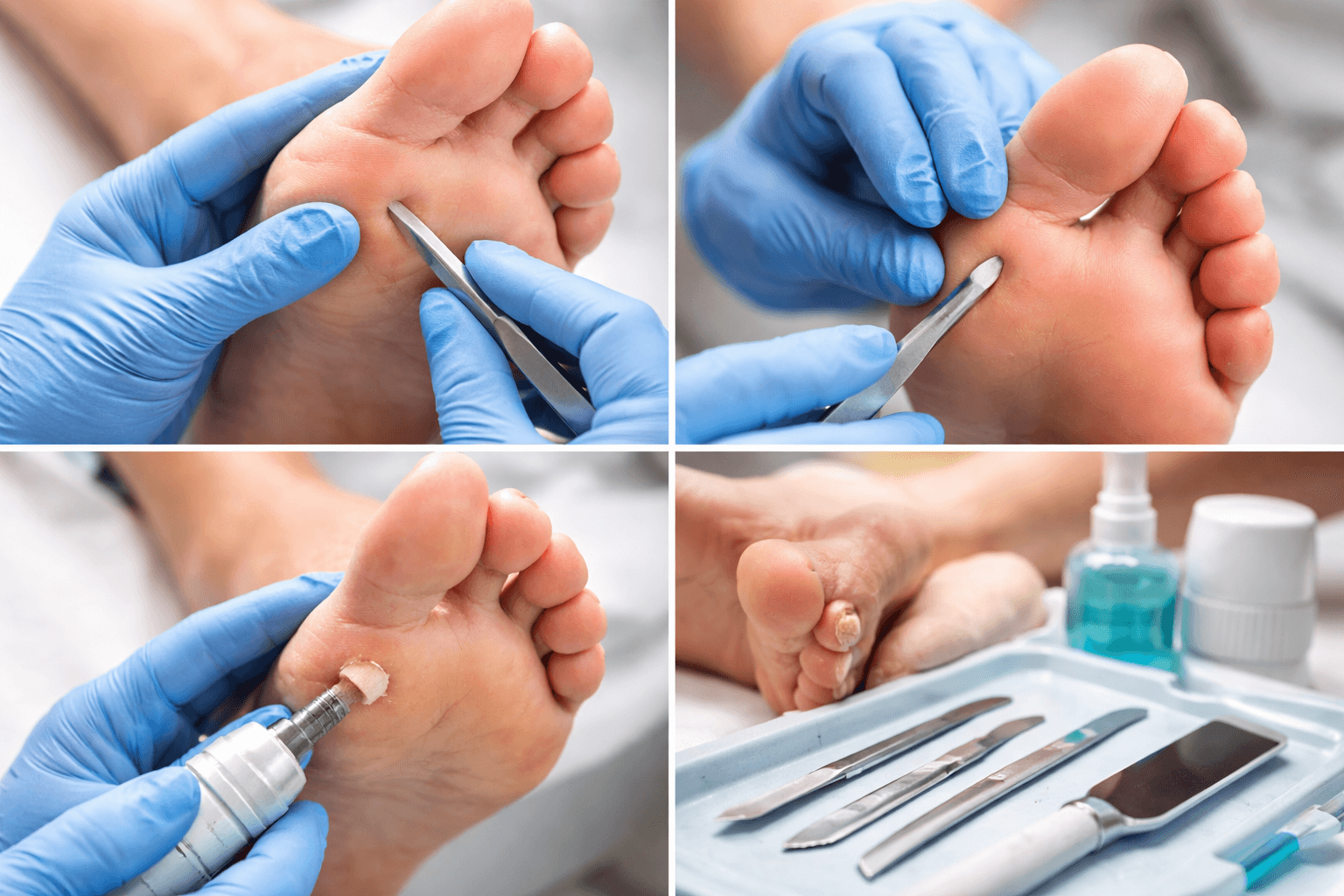
Safe handling of scalpels and blades
Step-by-step callus and corn reduction techniques
Management of cracked heels and hyperkeratosis
Infection prevention and control principles
Client education and clinical documentation
Practical Skill Development
To support skill acquisition, a Foot Care Skills Workshop for Callus and Corn Treatment may include:
Demonstration videos
Case-based learning scenarios
Guided technique reviews
Knowledge or competency assessments
Successful completion results in a certificate of completion, which acknowledges participation and learning. It does not confer certification, licensure, or an expanded scope of practice.
Who Can Benefit From a Foot Care Skills Workshop for Callus and Corn Treatment?
A Foot Care Skills Workshop for Callus and Corn Treatment is commonly relevant for regulated healthcare professionals who already provide direct client care, including:
Registered Nurses (RNs)
Registered Practical Nurses (RPNs) or Licensed Practical Nurses (LPNs)
Nurses providing foot care in community, home care, or long-term care settings
Healthcare professionals supporting older adults or individuals living with diabetes
All participants remain accountable to their provincial regulatory body, employer policies, and individual competence.
Safety, Risk Assessment, and Scope of Practice in Canada
Safety and clinical judgment are central themes in a Foot Care Skills Workshop for Callus and Corn Treatment. Learners are taught to recognize when treatment should not proceed and when referral to another healthcare provider is required.
Risk assessment within a Foot Care Skills Workshop for Callus and Corn Treatment includes evaluation of:
Circulatory status
Sensation and presence of neuropathy
Skin integrity and wound risk
Relevant medical history and comorbidities
In Canada, all sharps-based foot care must align with provincial nursing scope-of-practice standards, organizational policies, and the practitioner’s education and demonstrated competence.
Professional Insight From a Nursing Education Perspective
From a nursing education perspective, a foot care skills workshop focused on callus and corn treatment supports consistency, safety, and ethical practice. Structured education reduces variation in technique and helps prevent reliance on informal, incomplete, or outdated training methods.
These workshops reinforce professional accountability, evidence-informed decision-making, and client-centered care while supporting nurses in meeting regulatory and workplace expectations.
Key Takeaways
A foot care skills workshop focused on callus and corn treatment addresses common yet potentially complex foot conditions.
Sharps-based foot care requires specific education, assessment skills, and clinical judgment.
Workshops focus on conservative, non-surgical management of corns, calluses, and cracked heels.
Training supports safe practice within the Canadian nursing scope of practice.
Certificates of completion acknowledge learning but do not expand licensure or certification.
Ethical Closing Statement
Foot care education is not about cosmetic outcomes or shortcuts. It is about supporting safe, evidence-informed, and respectful care for individuals who rely on healthcare professionals to protect their mobility and quality of life. Structured education provides a foundation for responsible practice grounded in professional standards.
https://www.afcnlearninginstitute.com/products/live_events/foot-care-skills-workshop
FAQs
What is a foot care skills workshop with sharps?
A foot care skills workshop with sharps is an educational program that teaches conservative, non-surgical techniques for reducing corns and calluses using scalpels or blades within professional scope of practice.
Who should take sharps-based foot care training?
It is intended for regulated healthcare professionals, such as nurses, who already provide foot care and seek additional education to support safe practice.
Does completing a workshop allow independent practice?
No. A workshop provides education and skill development only. Independent practice depends on provincial regulation, employer policy, and individual scope of practice.
Is sharps-based foot care safe?
When performed by appropriately educated professionals using proper assessment, infection control, and clinical judgment, sharps-based foot care can be a safe component of conservative foot care.