
Table of Contents
- Understanding the Foundations of a Foot Care Nursing Business
- Clinical and Operational Components in the Foot Care Nurse Business Start-Up Guide
- Regulatory Considerations for Canadian Nurses
- Common Misconceptions About Starting a Foot Care Nursing Business
- Education and Ongoing Competence Development
- Practical Planning Framework
- Key Takeaways
- Professional Closing Statement
- FAQs
Foot Care Nurse Business Start-Up Guide
Starting an independent nursing service requires clinical judgment, regulatory awareness, and thoughtful planning. The Foot Care Nurse Business Start-Up Guide is designed to support Canadian nurses who are exploring or preparing to launch a foot care nursing practice within their provincial scope of practice.
Foot care nursing continues to grow across Canada in community, private, and long-term care settings. Nurses entering this area must balance clinical responsibilities with operational considerations such as equipment selection, documentation systems, infection prevention standards, and business structure. The Foot Care Nurse Business Start-Up Guide provides structured educational direction to help nurses approach this transition responsibly and methodically.
It is important to clarify that completing educational resources does not grant authorization to practise independently. The scope of practice varies by province, regulatory body, and employer. Nurses are responsible for understanding and adhering to their individual provincial standards.
Understanding the Foundations of a Foot Care Nursing Business
A professional foot care nursing service integrates clinical competence with sound business processes. Before launching services, nurses should have:
Recognized foot care nursing education
Current professional registration in Canada
Professional liability protection
Clear understanding of provincial scope requirements
Policies aligned with infection prevention standards
The Foot Care Nurse Business Start-Up Guide outlines foundational considerations in a structured format appropriate for regulated healthcare professionals.
Key foundational areas include:
Clinical Readiness
Completion of comprehensive foot care education, including theory and supervised practice, such as programs outlined in the foundational foot care nursing education pathway.Infection Prevention and Control
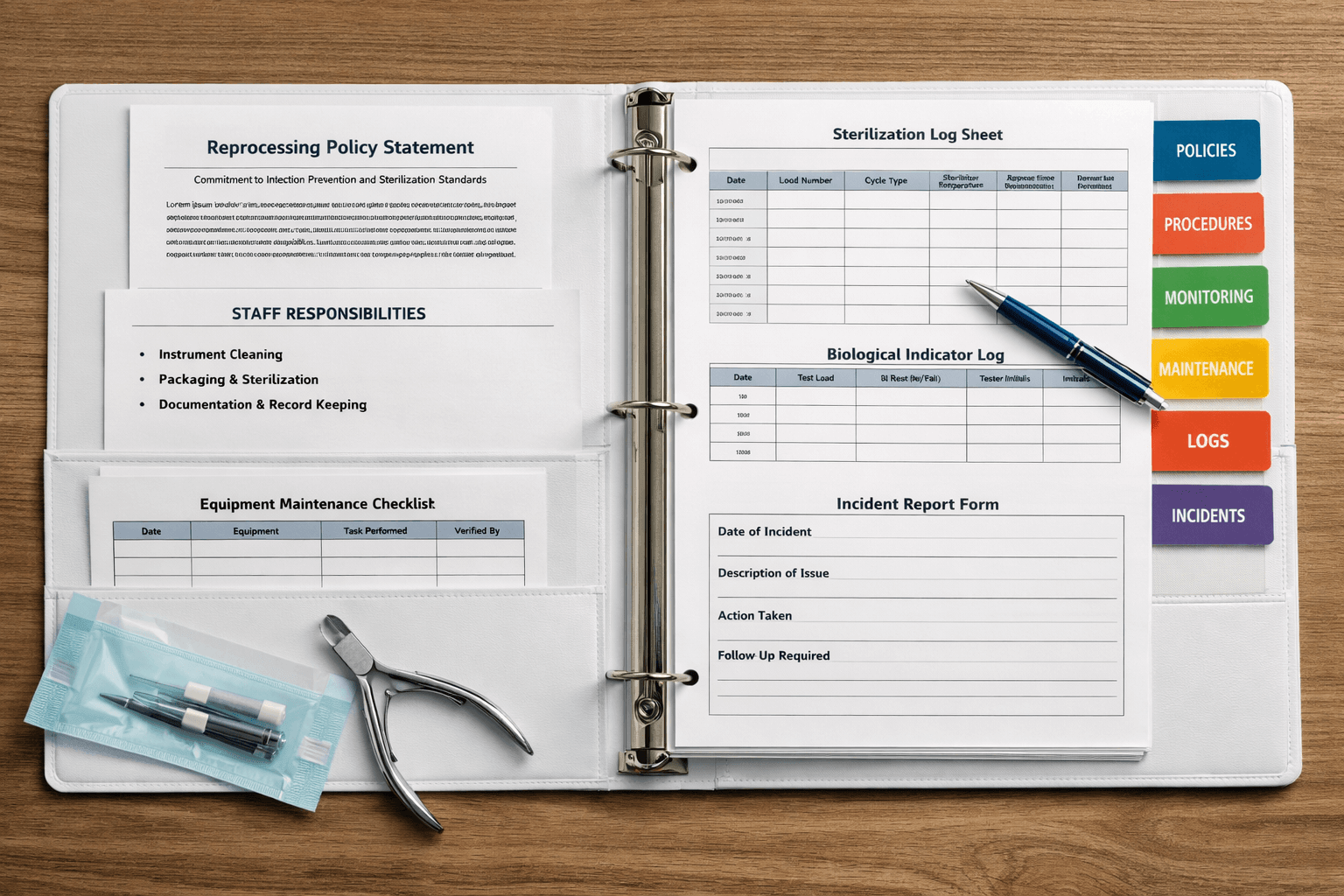
Proper reprocessing of instruments in accordance with Canadian standards. Nurses should be familiar with best practices outlined in infection prevention and medical device reprocessing education.Documentation and Consent
Accurate charting, informed consent, and privacy compliance under provincial health information legislation.Business Structure
Sole proprietorship or incorporation decisions should be made in consultation with qualified financial and legal professionals.
Clinical and Operational Components in the Foot Care Nurse Business Start-Up Guide
The Foot Care Nurse Business Start-Up Guide addresses both clinical and operational components required when developing a nursing service.
Equipment and Instruments
Foot care nurses require appropriate tools that meet safety and reprocessing standards. Considerations include:
High-quality nail nippers and curettes
Medical-grade rotary instruments
Personal protective equipment
Sharps containers
Sterilization or high-level disinfection systems
Equipment choices must align with infection prevention education and provincial public health guidance. Nurses may benefit from reviewing structured learning modules within the clinical skills and tools education hub.
Pricing and Financial Structure
Fee setting must reflect:
Time required per client
Equipment and reprocessing costs
Travel (for mobile services)
Documentation and administrative time
The Foot Care Nurse Business Start-Up Guide includes a simplified planning template to assist nurses in organizing pricing structures and payment processes. However, nurses remain responsible for ensuring compliance with provincial regulations and taxation requirements.
Professional Boundaries and Ethics
Independent practice requires clear professional boundaries. Nurses must:
Avoid providing services outside their scope
Maintain documentation standards
Use evidence-informed practice
Refer clients appropriately when conditions exceed the nursing scope
Education in scope of practice and professional accountability supports safe decision-making in this area.
Regulatory Considerations for Canadian Nurses
Across Canada, nursing practice is regulated provincially. While foot care nursing is generally within scope for many RNs, RPNs, and LPNs, authorization depends on:
Individual competence
Employer policies (if applicable)
Regulatory standards
Practice setting
The Foot Care Nurse Business Start-Up Guide emphasizes that education supports competence development but does not replace regulatory requirements.
Additional considerations include:
Liability insurance coverage specific to independent practice
Clear cancellation and payment policies
Privacy-compliant record storage
Continuing professional development
Nurses returning to practice may wish to review structured support available through professional development and returning-to-practice resources.
Common Misconceptions About Starting a Foot Care Nursing Business
There are several common misunderstandings when nurses consider independent foot care services.
Misconception 1: Education automatically authorizes independent practice.
In reality, authorization depends on provincial regulations, competence, and liability coverage.
Misconception 2: Foot care services require minimal documentation.
All nursing care must meet professional documentation standards.
Misconception 3: Infection control requirements are simplified in community settings.
Reprocessing standards apply regardless of care setting.
Misconception 4: Pricing can be based solely on local competitors.
Fees should reflect operational costs, professional judgment, and sustainability.
The Foot Care Nurse Business Start-Up Guide addresses these misconceptions by presenting structured, education-based guidance rather than business promotion.
Education and Ongoing Competence Development
Launching a foot care nursing practice is not a one-time event. It requires continuous learning and quality improvement.
Nurses should consider:
Advanced foot and nail pathology education
Updates in infection prevention standards
Attendance at professional conferences
Peer networking opportunities
Quality assurance participation
Structured continuing education available through the AFCN Learning Institute education hub can support ongoing competence development.
The Foot Care Nurse Business Start-Up Guide is intended as a planning and organizational resource that complements, but does not replace, comprehensive clinical education.
Practical Planning Framework
To support structured preparation, the following phased approach may be helpful:
| Phase | Focus Area | Key Actions |
|---|---|---|
| Phase 1 | Education | Complete recognized foot care training |
| Phase 2 | Regulatory Review | Confirm scope and liability coverage |
| Phase 3 | Equipment Acquisition | Purchase compliant instruments |
| Phase 4 | Policy Development | Create consent, documentation, and infection control policies |
| Phase 5 | Launch Preparation | Establish pricing and scheduling systems |
The Foot Care Nurse Business Start-Up Guide organizes these steps into a clear planning format suitable for regulated healthcare professionals.
Key Takeaways
Independent foot care nursing requires both clinical competence and operational planning.
The scope of practice varies by province and employer across Canada.
Infection prevention standards apply in all care settings.
Education supports competence but does not grant authorization to practise.
Structured planning tools can help nurses organize business development responsibly.
Professional Closing Statement
The Foot Care Nurse Business Start-Up Guide is designed to provide structured, educational support for Canadian nurses exploring independent foot care services. Nurses remain responsible for meeting all provincial regulatory requirements, maintaining competence, and practising within their authorized scope. Thoughtful preparation and ongoing education are central to safe, ethical nursing practice in any setting.
FAQs
Is foot care nursing within scope for Canadian nurses?
In many provinces, foot care nursing is within scope for RNs, RPNs, and LPNs, provided the nurse has appropriate education and competence. Scope varies by province and employer.
Does completing a start-up guide authorize me to open a practice?
No. Educational resources support planning and competence development but do not grant authorization to practise independently.
Do independent foot care nurses need liability insurance?
Yes. Nurses providing independent services in Canada are generally required to maintain appropriate professional liability coverage.
What is the first step before starting a foot care nursing business?
Completing recognized foot care education and reviewing your provincial scope of practice requirements are foundational first steps.