
Table of Contents
Advanced Foot Care Nurse Course: What to Expect
What to Expect in Advanced Foot Care Nurse Course is a common question among licensed nurses exploring specialized education in foot care nursing. A nurse can be excellent at wound care, patient education, and chronic disease management—and still feel underprepared the first time they assess a high-risk foot independently. That gap is exactly why an advanced foot care nurse course matters.
What an Advanced Foot Care Nurse Course Should Actually Teach
A strong advanced foot care nurse course goes far beyond theory. It should help you connect anatomy, pathology, risk screening, infection prevention, documentation, and hands-on technique in a way that reflects real patient care.
That means you should expect a curriculum built around lower limb and foot assessment, common and complex nail and skin conditions, diabetic and vascular risk factors, biomechanics, pressure-related concerns, and recognition of red flags that require referral. If a course stays too general, you may finish with information but not true readiness.
Clinical decision-making is where advanced training earns its value. Nurses in this specialty need to know when care is appropriate, when to modify treatment, and when a patient should be directed to another provider. Safe practice depends on more than technical ability. It depends on knowing your scope, understanding contraindications, and recognizing how quickly a routine appointment can become high risk.
The Difference Between Basic Training and Advanced Preparation
Not every foot care program is designed for the same outcome. Some introduce the specialty. Others prepare you to practice with a higher level of independence and accountability.
Basic education may cover essential techniques and common conditions. Advanced preparation should go further by developing your assessment framework, strengthening your critical thinking, and addressing more complex client presentations. It should also prepare you to work with patients who have diabetes, peripheral vascular disease, neuropathy, mobility limitations, immune compromise, and multiple comorbidities.
This difference matters because foot care nursing often happens in settings where you are the clinician in the room making the call. Whether you work in community practice, long-term care, retirement settings, or mobile care, you need a course that respects the clinical realities of independent judgment.
Advanced Foot Care Nurse Course Content That Builds Confidence
Confidence in this specialty does not come from watching a few demonstrations. It comes from structured learning, repetition, and supervised practice.
The strongest programs usually combine evidence-based instruction with hands-on skill development. That might include:
- Instrument handling
- Nail reduction techniques
- Callus reduction techniques
- Safe equipment use
- Infection prevention and control
- Patient positioning
- Clinical documentation
- Workflow development
Just as important, the course should explain why each step matters. Nurses build lasting confidence when they understand the rationale behind every action.
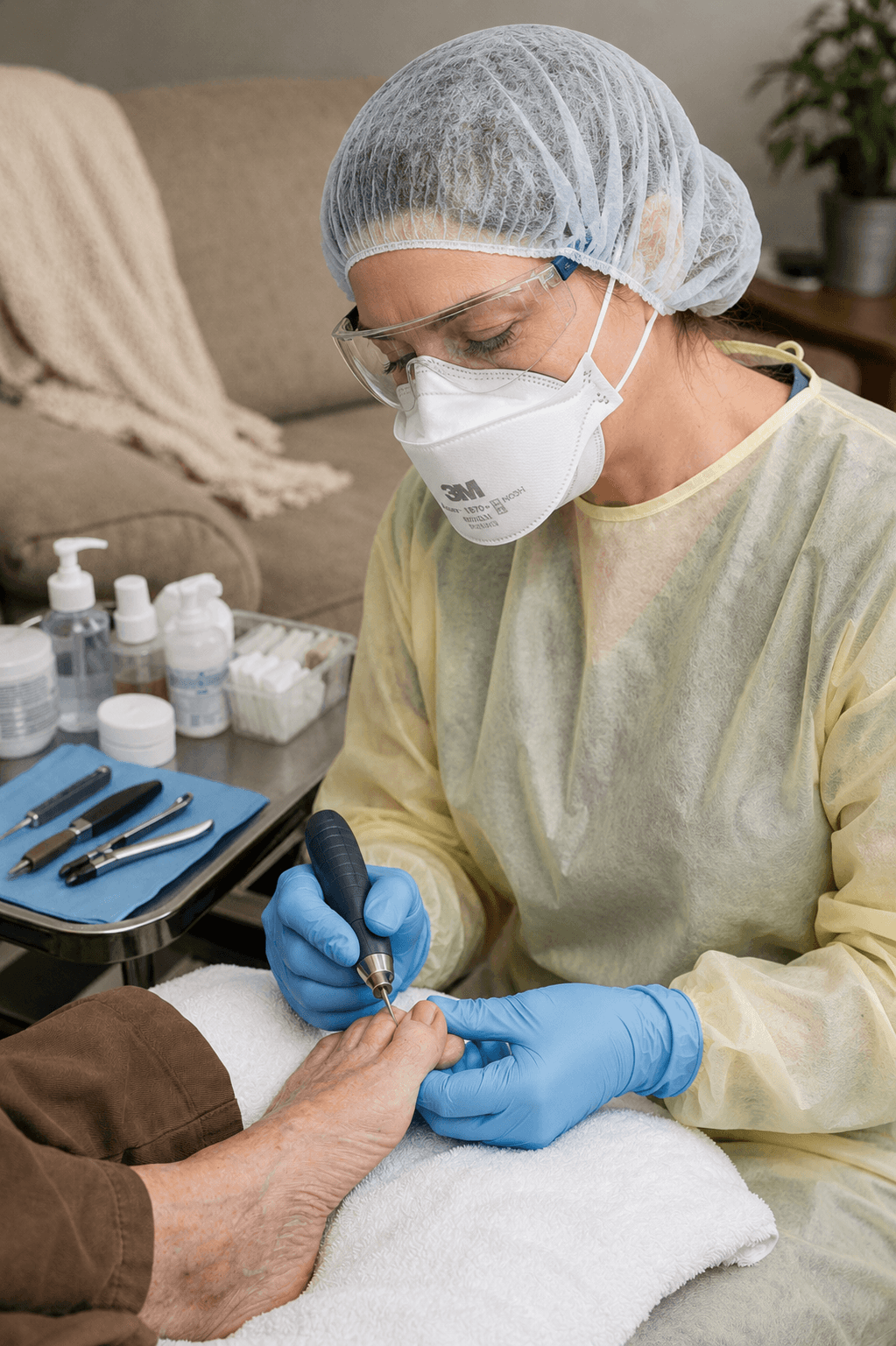
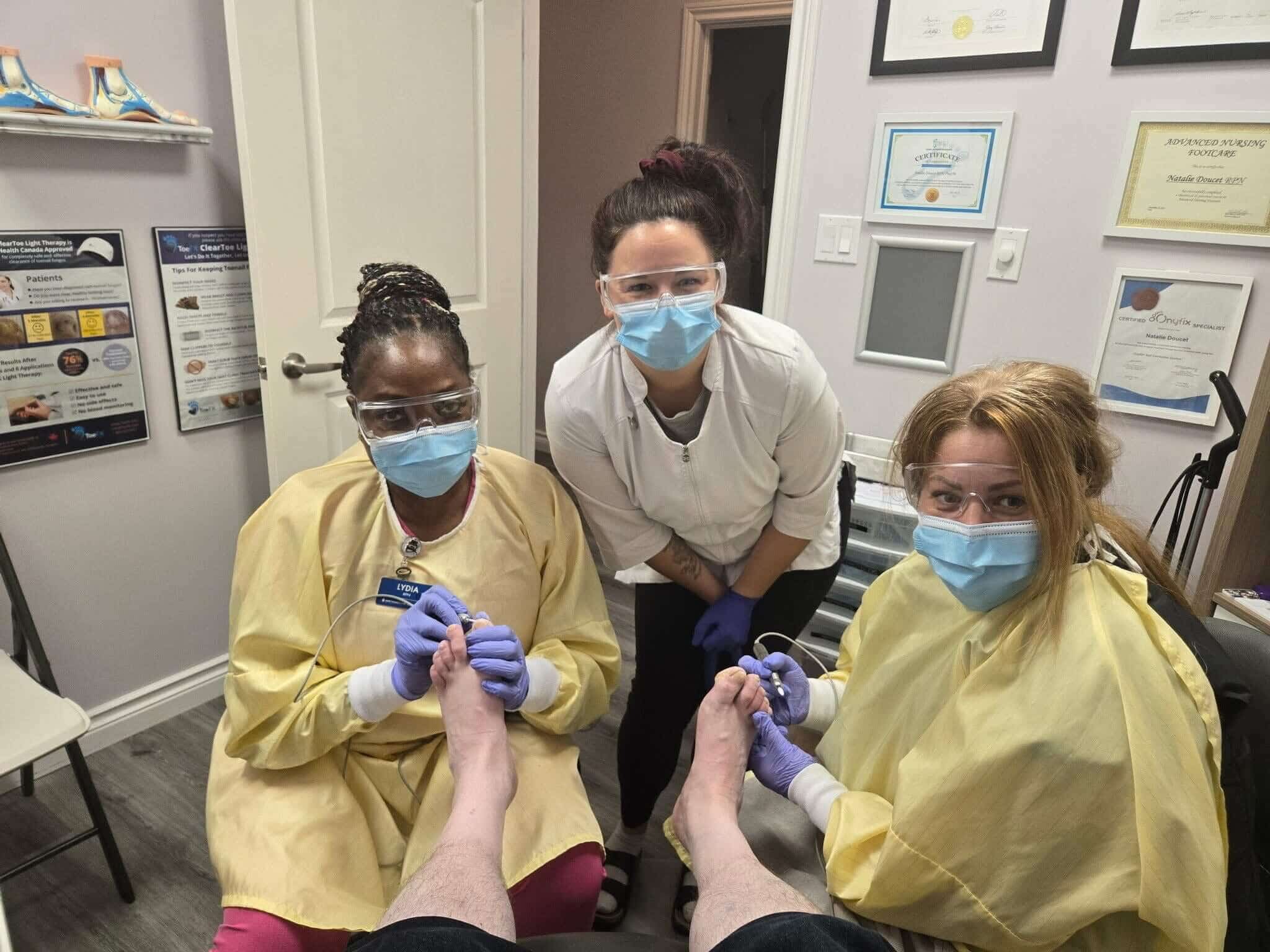
Hands-on learning is especially important. A course can sound comprehensive on paper but still leave learners unsure in practice if there is no clinical application. Supervised placements, practical intensives, or skills labs help bridge that gap. They allow you to refine technique, ask case-specific questions, and receive direct feedback before you are fully on your own.
That feedback loop is often the difference between a nurse who has completed training and a nurse who is truly prepared to excel.
Compliance Is Not Optional
Another important aspect of What to Expect in Advanced Foot Care Nurse Course is learning about compliance, documentation, and infection prevention.
One of the most overlooked parts of choosing an advanced course is compliance education. Yet this is where many nurses either protect their practice or expose it to unnecessary risk.
A credible course should address documentation standards, consent, policies and procedures, infection prevention and control, equipment reprocessing, contraindications, and professional accountability. It should also align with recognized competencies and reflect the regulatory expectations that affect foot care nursing practice.
This matters whether you are employed by an organization or planning to build your own business. In either case, sound systems protect patients and strengthen your credibility. Clinical skill without compliance knowledge is not advanced practice. It is incomplete practice.
For nurses who want to launch an independent service, compliance becomes even more practical. You are not just thinking about patient care. You are also thinking about workflow, record-keeping, quality assurance, and how to create a practice that can stand up to scrutiny.
If You Want to Build a Practice, the Course Should Say So
Many nurses enter this specialty because they want more flexibility, better income control, and the ability to shape their own career path. That is a smart reason to pursue training, but not every course is built with that goal in mind.
If your aim is to start or grow a foot care business, look for education that includes implementation support. You may need guidance on setting up services, establishing professional boundaries, pricing, scheduling, forms, policies, and patient communication. Those are not extras. They are part of what makes a practice sustainable.
There is a real trade-off here. A clinically solid course that ignores business readiness may still be worthwhile if you plan to stay in an employed role. But for entrepreneurial nurses, that same course may leave a major gap. You could finish with strong technical skills and still feel stuck when it is time to operationalize them.
That is why a full pathway matters. At AFCN Learning Institute, the strongest professional development does not end with a certificate. It supports nurses as they move from learning to implementation to long-term growth.
Mentorship and Community Are Part of Advanced Learning
Foot care nursing can feel isolating when you are building a specialty practice without a peer network. Even experienced nurses can question themselves when they encounter unfamiliar presentations or business decisions.
That is why mentorship should not be treated as a nice bonus. It is often a major factor in whether a nurse moves forward with confidence. Ongoing access to educators, peers, and a professional community creates space for case discussion, practical troubleshooting, and continued growth.
A strong course provider understands that competence develops over time. You may complete your coursework in a defined period, but your clinical judgment keeps evolving through support, reflection, and exposure to more cases. Community makes that evolution faster and less stressful.
How to Evaluate a Course Before You Enroll
Nurses researching What to Expect in Advanced Foot Care Nurse Course should evaluate both clinical training and ongoing professional support.
Before committing to an advanced foot care nurse course, ask direct questions.
Consider whether the program:
- Is designed specifically for licensed nurses
- Includes hands-on clinical learning
- Aligns with recognized competencies
- Covers infection prevention and control
- Includes documentation and scope education
- Provides mentorship after course completion
You should also consider the teaching model. Some nurses thrive with self-paced theory and in-person clinical practice. Others need more live instruction and guided discussion. Neither preference is wrong, but the course should match the way you learn best.
It also helps to think about your next step, not just your immediate one. If you want a side service today and a full independent practice later, choose education that can grow with you. Starting over with a different provider six months from now often costs more time and money than choosing a more complete pathway at the beginning.
The Right Course Should Change How You Practice
The best advanced education does more than add a service to your resume. It changes the way you assess risk, organize care, document decisions, and communicate with patients. It sharpens your standards and expands your options.
That transformation is especially valuable for nurses who are ready for something more. Maybe you want a specialty with purpose. Maybe you want to work more independently. Maybe you are looking for a way to build a practice that reflects both your clinical strengths and your long-term goals.
An advanced foot care nurse course should help you do exactly that. Not by promising easy success, but by giving you the training, structure, and support to build real competence. When education is evidence-based, practical, and connected to the realities of modern nursing practice, it does more than prepare you for your next patient. It helps you build the kind of career you can be proud to grow.
Key Takeaways
- Advanced foot care education extends beyond technical skills to include clinical reasoning and decision-making.
- Hands-on practice, mentorship, and feedback are essential for developing confidence.
- Compliance, documentation, and infection prevention are fundamental to safe nursing practice.
- Business education is valuable for nurses planning to establish an independent foot care service.
- Choosing a course that supports long-term professional growth can help nurses build sustainable careers.
Ready to Take the Next Step?
Explore AFCN Learning Institute's Advanced Foot Care Nurse Course and discover a learning pathway that combines evidence-based education, hands-on clinical experience, mentorship, and professional development.
Enroll Now
https://www.afcnlearninginstitute.com/courses/advancedfootcarenursecourse
FAQs
Who should take an advanced foot care nurse course?
An advanced foot care nurse course is designed for licensed nurses, such as RNs, RPNs, and LPNs, who want to develop specialized knowledge in lower limb assessment, evidence-based foot care, and the management of patients with complex foot health needs. Scope of practice varies by province, territory, employer, and regulatory requirements.
What skills will I learn in an advanced foot care nurse course?
Most comprehensive programs cover lower limb and foot assessment, nail and skin care techniques, diabetic and vascular risk assessment, infection prevention and control, documentation, instrument handling, clinical decision-making, and recognizing when referral to another healthcare provider is appropriate.
Does completing an advanced foot care nurse course allow me to practise independently?
Completing a course provides specialized education and a certificate of completion, but it does not automatically authorize independent practice. Nurses must always practise within their professional scope, employer policies, and the requirements of their provincial or territorial nursing regulatory body.
Is hands-on clinical training important in an advanced foot care nurse course?
Yes. Practical learning is an essential part of developing confidence and competence. Supervised clinical experiences, skills labs, or practical intensives allow nurses to apply theory, refine techniques, receive feedback, and build sound clinical judgment before providing care independently.
What should I look for when choosing an advanced foot care nurse course?
Look for a program that combines evidence-based education with hands-on training, covers infection prevention and control, documentation, professional accountability, and clinical decision-making, and offers ongoing mentorship or professional support. If your goal is to establish an independent foot care practice, consider whether the course also includes guidance on implementing services and practice management.