
Table of Contents
- Understanding Patient Education Strategies for Foot Care Nurses
- Key Concepts in Foot Care Patient Education
- Professional Considerations for Foot Care Nurses
- Adapting Patient Education for Different Populations
- Common Misconceptions About Foot Care Education
- Professional Nursing Education Insight
- Key Takeaways
- Conclusion
- FAQs
Patient Education Strategies for Foot Care Nurses
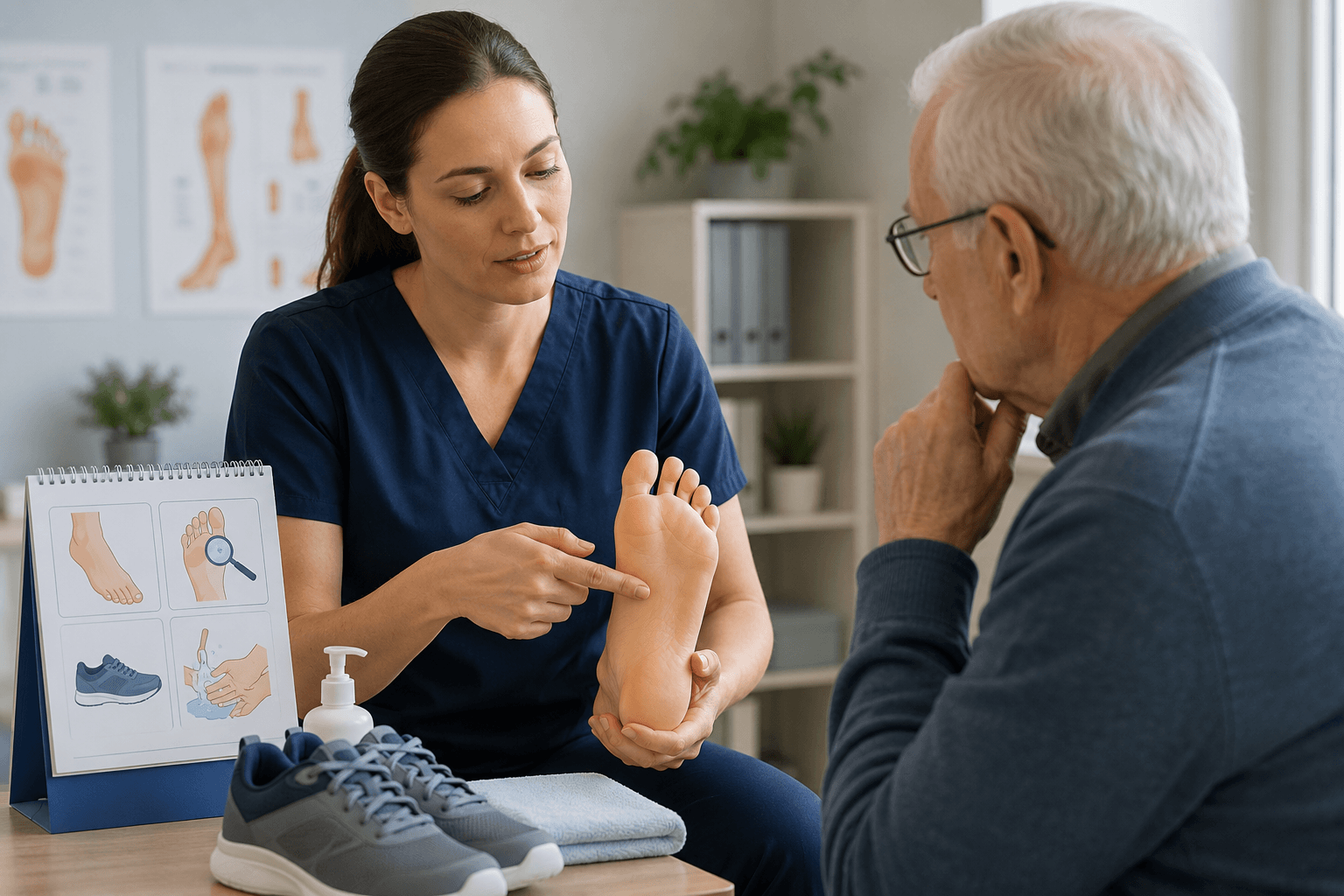
Patient education is a central component of safe and ethical nursing practice. In foot care nursing, teaching supports prevention, early recognition of complications, and patient participation in daily foot health. Patient Education Strategies for Foot Care Nurses help licensed nurses communicate practical information in ways that patients can understand and apply in everyday life.
In Canada, nurses frequently encounter individuals with chronic conditions such as diabetes, vascular disease, mobility limitations, or reduced vision. These factors can increase the risk of foot complications. Effective education allows patients and caregivers to understand routine care practices, recognize warning signs, and know when to seek professional care.
Nurses providing foot care education must also remember that scope of practice varies by province, regulatory college, and employer policies. Completing education in foot care nursing provides a certificate of completion, but it does not authorize a nurse to practise independently outside their regulated scope.
Understanding Patient Education Strategies for Foot Care Nurses
Patient Education Strategies for Foot Care Nurses refer to structured teaching approaches that help patients learn how to maintain foot health safely. These strategies involve more than simply giving instructions. They include assessing patient readiness, using clear language, confirming understanding, and adapting education to individual needs.
Foot care education often focuses on practical self-care activities such as:
Daily foot inspection
Skin hydration and nail care awareness
Proper footwear selection
Early recognition of infection or injury
Knowing when to consult a healthcare professional
Effective education emphasizes prevention and awareness, rather than attempting to replace professional assessment or treatment.
For nurses seeking structured learning, educational resources such as the AFCN Learning Institute education hub, foundational foot care nursing education, and scope of practice education resources provide guidance on patient communication and clinical safety.
Key Concepts in Foot Care Patient Education
Foot care teaching should be grounded in basic nursing education principles. Several core concepts guide safe and effective patient instruction.
1. Assess the Patient’s Learning Needs
Before providing education, nurses should determine:
The patient’s current knowledge
Cognitive or sensory limitations
Cultural or language considerations
Ability to perform self-care tasks
This assessment ensures the education is realistic and appropriate.
2. Use Plain Language
Foot care instructions should avoid medical terminology whenever possible. For example:
| Clinical Term | Plain Language Alternative |
|---|---|
| Peripheral neuropathy | Reduced feeling in the feet |
| Ulceration | Open sore |
| Infection | Redness, swelling, or drainage |
Using simple language improves patient understanding and adherence.
3. Demonstration and Return Demonstration
Teaching is often most effective when patients can observe and practice skills.
Examples include:
Demonstrating safe foot inspection techniques
Showing how to apply moisturizer while avoiding the spaces between toes
Practicing how to check inside footwear for foreign objects
Return demonstration allows nurses to confirm understanding.
Education about infection prevention and medical device reprocessing principles may also be relevant when patients or caregivers use foot care tools at home.
Professional Considerations for Foot Care Nurses
Delivering education requires attention to clinical responsibility, ethics, and regulatory awareness.
Scope of Practice
Canadian nurses must practice within the limits defined by their provincial regulatory college and employer policies. Even when nurses complete additional training, such as foot care education programs, their authority to perform or teach certain procedures may vary.
Educational programs typically provide knowledge and skill development, but they do not grant professional licensure or expanded authority.
Safety and Risk Awareness
Patients at higher risk of foot complications may include those with:
Diabetes
Peripheral vascular disease
Reduced sensation in the feet
Mobility limitations
Vision impairment
When teaching these individuals, nurses must emphasize when professional assessment is required, rather than encouraging independent management of high-risk concerns.
Ethical Communication
Education must remain accurate, balanced, and non-promotional. Nurses should present information in ways that support patient decision-making without creating unrealistic expectations.
Resources related to clinical skills and tools education and professional development for returning nurses can help support safe communication practices.
Adapting Patient Education for Different Populations
Effective Patient Education Strategies for Foot Care Nurses recognize that patients have diverse learning styles and abilities.
Examples of adaptations include:
Older adults
Larger print written materials
Slower pace of instruction
Reinforcement of key messages
Patients with limited mobility
Demonstrating seated foot inspection techniques
Encouraging caregiver involvement when appropriate
Patients with vision limitations
Using tactile cues
Encouraging assistance from trusted caregivers
Education should also respect cultural preferences and language differences. Using interpreters or translated materials may improve patient understanding.
Common Misconceptions About Foot Care Education
Several misunderstandings can affect patient learning.
One misconception is that routine foot care instructions are universally applicable to every patient. In reality, Patient Education Strategies for Foot Care Nurses must be individualized based on risk factors and patient abilities.
Another misunderstanding is that education replaces professional care. Teaching patients to inspect their feet does not eliminate the need for clinical assessments, particularly for individuals with chronic disease.
A third misconception is that written instructions alone are sufficient. Research in nursing education consistently shows that demonstration and interactive teaching methods improve retention.
Professional Nursing Education Insight
Foot care nursing education programs often emphasize communication skills alongside clinical techniques. These programs explore Patient Education Strategies for Foot Care Nurses that align with broader nursing competencies such as patient-centred care, health promotion, and chronic disease prevention.
Structured education helps nurses learn how to:
Translate clinical knowledge into understandable information
Identify barriers to patient learning
Reinforce safety messages
Encourage preventive care practices
Nurses pursuing continuing education may also benefit from resources covering infection prevention and medical device reprocessing education, scope of practice learning modules, and foundational foot care nursing programs that support safe clinical practice.
While education strengthens knowledge and competence, it does not replace regulatory authorization or employer policy requirements.
Key Takeaways
Patient Education Strategies for Foot Care Nurses support prevention and patient participation in foot health.
Education should use plain language, demonstrations, and confirmation of understanding.
Scope of practice for Canadian nurses varies by province and employer policies.
Foot care education programs provide a certificate of completion, not authorization to practise independently.
Patient teaching should emphasize early recognition of complications and appropriate referral.
Conclusion
Clear and practical education is an important component of foot care nursing. By applying structured Patient Education Strategies for Foot Care Nurses, licensed nurses can support patient awareness, promote preventive care practices, and reinforce safe foot health behaviours.
As with all areas of nursing practice in Canada, patient teaching must remain consistent with regulatory standards, employer policies, and professional ethical responsibilities.
https://www.afcnlearninginstitute.com/
FAQs
What do foot care nurses teach patients about daily foot care?
Foot care nurses commonly teach patients how to inspect their feet daily, maintain skin hydration, choose safe footwear, and recognize early signs of infection or injury.
Why is patient education important in foot care nursing?
Education helps patients recognize problems early and practice preventive care, which may reduce the risk of complications such as wounds or infections.
Does completing a foot care course allow a nurse to practise independently in Canada?
No. Foot care nursing education programs provide a certificate of completion. Authorization to practise depends on provincial regulatory colleges and employer policies.
What teaching methods work best for foot care education?
Demonstration, plain language instructions, and return demonstration are commonly used methods that help patients understand and apply foot care practices safely.