
Table of Contents
Infection Control Education for Advanced Foot Care
Introduction
Infection Control Education for Advanced Foot Care supports nurses in applying infection prevention and control (IPAC) principles in foot care practice. Nurses may work in clinics, long-term care, home care, or other settings, each with its own policies, resources, and applicable requirements.
Education can help nurses understand general infection-prevention principles and identify where to find setting-specific guidance. It is also important to distinguish general IPAC education from instruction in particular procedures, such as medical device reprocessing.
This article provides an educational overview. It does not provide clinical procedures or replace current regulator guidance, organizational policies, local public health advice, or manufacturer instructions.
Infection Prevention in Foot Care Practice
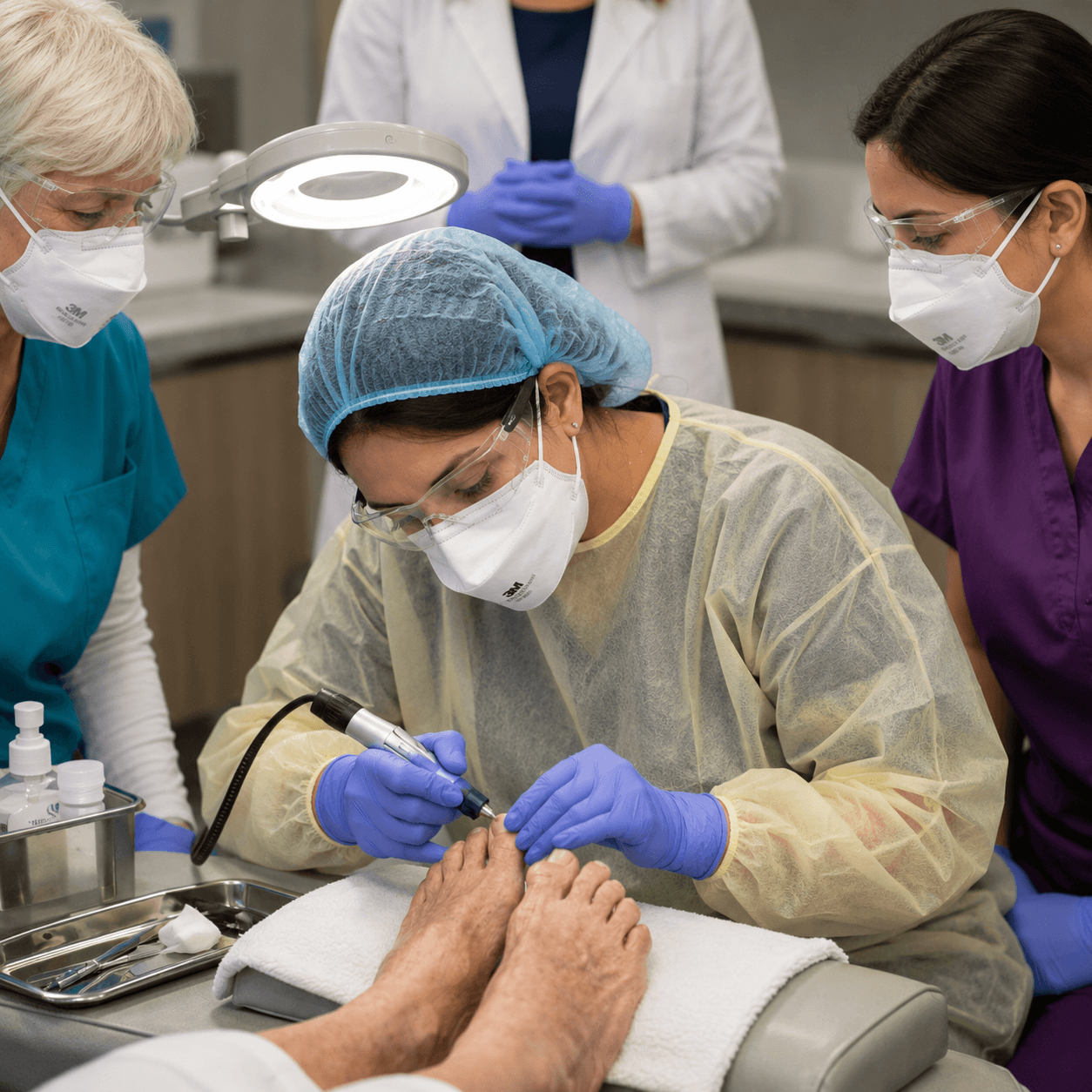
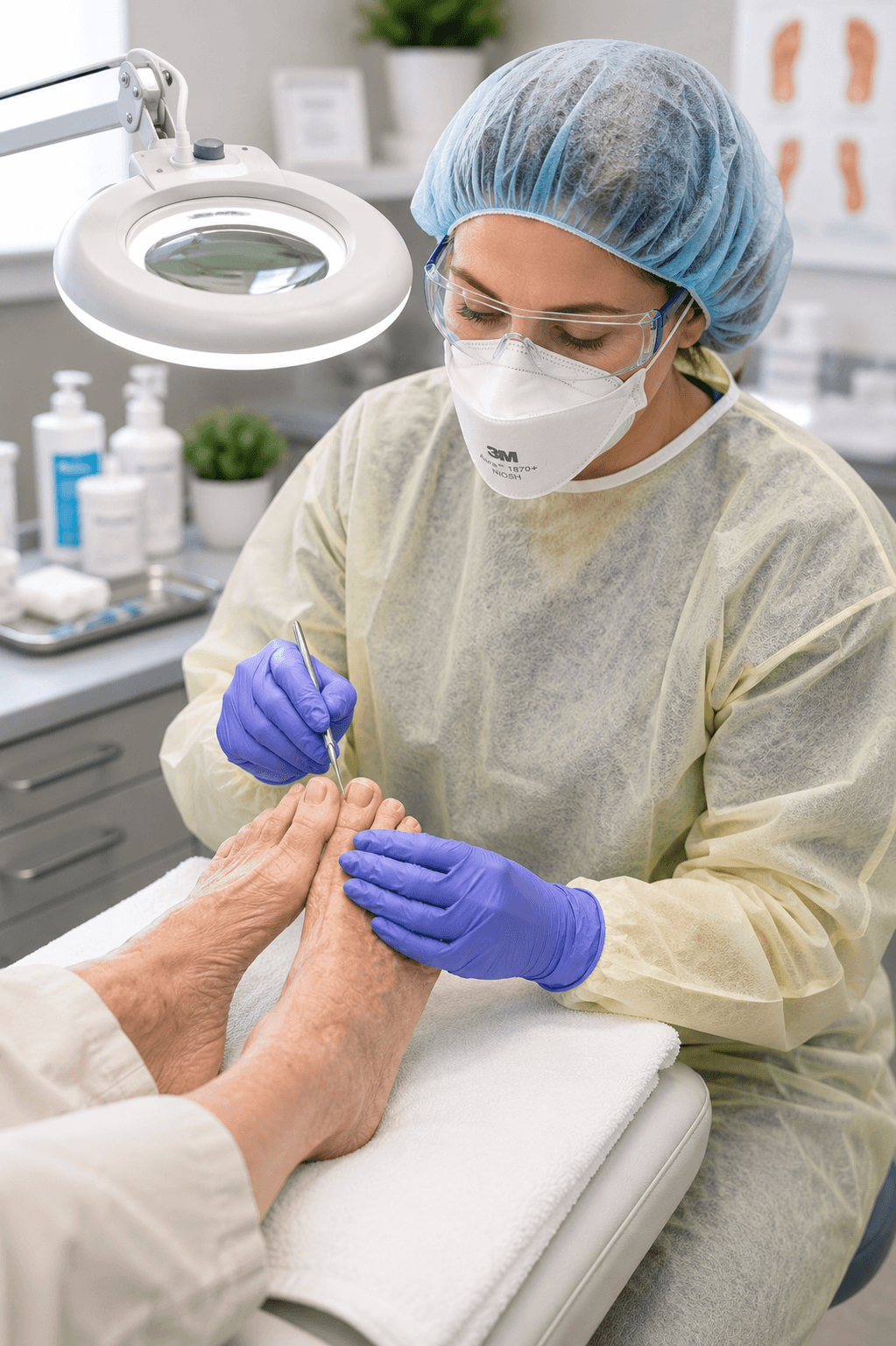
Infection prevention measures aim to reduce the risk of transmitting microorganisms between clients, healthcare providers, equipment, and the care environment. The Public Health Agency of Canada’s Routine Practices and Additional Precautions guideline describes a framework for healthcare settings across Canada. It is designed for infection-control professionals and advises that recommendations be adapted for local settings and conditions.
Depending on the care task, client presentation, environment, and setting, relevant topics may include:
- Hand hygiene.
- Point-of-care risk assessment.
- Personal protective equipment (PPE).
- Safe handling of equipment and supplies.
- Environmental cleaning.
- Sharps safety and waste management, where applicable.
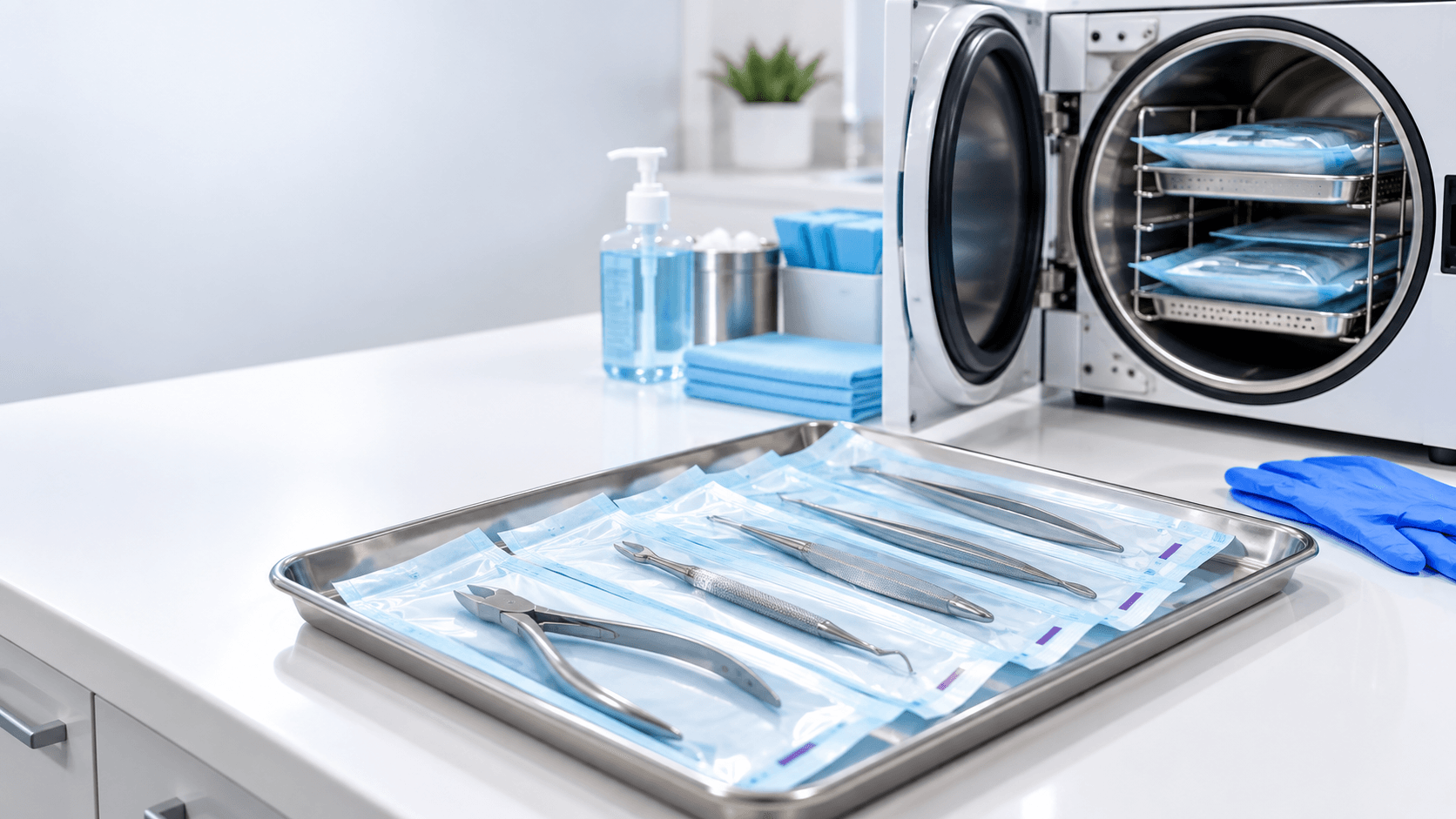
- Medical device reprocessing.
These are broad education topics, not a complete protocol. Nurses should follow the procedures and policies applicable to their own workplace or practice.
General IPAC Education and Foot Care Reprocessing
General infection-prevention education helps nurses understand concepts such as hand hygiene, risk assessment, and the appropriate use of PPE. Medical device reprocessing is a separate area that requires specific training, equipment, written procedures, and attention to the device manufacturer’s instructions and applicable standards.
Reusable Foot Care Devices
The IPAC Canada position statement on Reprocessing of Critical Foot Care Devices in Healthcare Settings is a foot-care-specific professional resource. Its September 2024 update considers reusable foot care equipment and devices critical and recommends a sterile set of foot care equipment for each client interaction.
This is an IPAC Canada position statement, not legislation or a nursing regulator’s practice standard. Its recommendations refer to manufacturer instructions and relevant national and provincial or territorial guidance. Nurses and organizations should determine how applicable requirements and recommendations relate to their own practice setting.
This article does not provide reprocessing steps or determine which process applies to a particular device. Those decisions require review of the current applicable guidance, device and sterilizer manufacturer instructions, and written procedures for the setting.
Environmental Cleaning
Cleaning and disinfecting the care environment is distinct from reprocessing reusable instruments. Public Health Ontario’s environmental-cleaning best-practice document addresses cleaning of the physical healthcare environment and noncritical equipment. Public Health Ontario notes that the document does not address sterilization or disinfection of critical and semi-critical devices.
The document is Ontario guidance, dated April 2018. It should not be presented as a Canada-wide rule. Nurses elsewhere in Canada should use the applicable guidance for their jurisdiction and setting.
Professional and Regulatory Responsibilities
Nursing regulation is provincial or territorial. A nurse should confirm applicable requirements with the regulator responsible for their designation and the location where they practise.
For Ontario nurses, the College of Nurses of Ontario’s Infection Prevention and Control resource states that nurses are expected to be aware of relevant CNO standards, legislation, best practices, and organizational policies. This is Ontario-specific guidance.
Nurses remain accountable for following applicable policies and recognizing when they need more information, training, or support. Completing a course can support learning, but a course certificate does not independently authorize practice or replace setting-specific procedures.
Common Misconceptions
“Infection prevention only matters in hospitals.”
The Public Health Agency of Canada’s routine-practices guideline applies across healthcare settings and emphasizes adapting local recommendations to the care environment. The details may differ by setting, but infection prevention remains a consideration in community, long-term care, and home-care practice.
“Cleaning is the same as reprocessing.”
Cleaning, disinfection, and sterilization are distinct terms and processes. Public Health Ontario describes reprocessing as the cleaning, disinfection, and sterilization of reusable medical equipment and devices. The appropriate process depends on the device and applicable requirements. This article does not give procedural directions.
“A general IPAC course covers every foot care device.”
General infection-prevention education and device-specific reprocessing training are not interchangeable. Nurses should check whether education addresses the device types and reprocessing responsibilities relevant to their role, and whether further training is required.
“Course completion settles what I can do in practice.”
A certificate of completion records a course provider’s completion requirements. Nurses must still follow applicable regulation, workplace policies, and their own professional accountabilities.
Education and Skill Development
When reviewing an education program, prospective students can ask:
- Does the curriculum distinguish general IPAC principles from device reprocessing?
- What instruction addresses hand hygiene, PPE, risk assessment, and environmental cleaning?
- Does the program explain how to locate current jurisdictional and workplace requirements?
- What device-reprocessing topics are included, and what practical training is provided?
- How does the program explain the limits of a course certificate?
The AFCN Learning Institute course information describes the program’s curriculum, including infection prevention and medical device reprocessing topics. Prospective students should review the current course details and ask the provider about the learning and assessment included.
Proposed educator contribution for Janis: What is a common misunderstanding you see about general IPAC education versus device-reprocessing training? How do you teach learners to check the applicable written procedures and seek guidance when something is unclear? Please provide or approve the wording before publication.
Key Takeaways
- IPAC education supports safe practice, while requirements depend on jurisdiction, setting, and role.
- General infection-prevention principles and device-reprocessing procedures are related but distinct.
- IPAC Canada’s September 2024 position statement is a foot-care-specific professional recommendation; it is not legislation.
- Ontario resources should be described as Ontario guidance.
- Course completion does not replace applicable requirements, policies, or professional accountability.
Nurses can support safer foot care by following current, relevant guidance and seeking appropriate training or advice when their responsibilities or a procedure are unclear.
Explore AFCN Education
To review AFCN’s current foot care education options, visit the AFCN Learning Institute course collection.
https://www.afcnlearninginstitute.com/
FAQs
What is infection control in foot care nursing?
Infection control in foot care nursing refers to procedures that reduce the risk of transmitting microorganisms during patient care, including hand hygiene, instrument reprocessing, and environmental cleaning.
Do Canadian nurses need special education for infection control in foot care?
Many foot care education programs include infection prevention training to help nurses understand safe practices. However, education alone does not authorize independent practice.
Does completing infection control education mean a nurse is certified in foot care?
No. Educational programs typically provide a certificate of completion. Certification or authorization to practise is determined by regulatory bodies and employers.
Why is instrument reprocessing important in foot care nursing?
Proper cleaning, disinfection, and sterilization of instruments helps prevent cross-contamination and protects both patients and healthcare providers.