
Table of Contents
Introduction
Developing competence in clinical skills often requires both structured education and supervised experience. In the context of foot care nursing, practitioners may encounter increasingly complex clinical presentations such as thickened nails, callus management, or risk factors associated with chronic disease. Building Confidence in Advanced Foot Care involves understanding procedural principles, safety considerations, and professional responsibilities within the nursing scope of practice.
In Canada, nurses providing foot care services typically pursue continuing education to support safe clinical practice. Educational programs may introduce advanced techniques, infection prevention practices, and medical device reprocessing requirements relevant to foot care settings. Building Confidence in Advanced Foot Care therefore involves not only learning procedures but also developing clinical reasoning and ethical awareness.
It is important to recognize that completing a course provides a certificate of completion, which confirms participation in education. It does not grant independent authorization to practise. Scope of practice for nurses always varies according to provincial regulation, employer policies, and individual competence.
Key Concepts in Advanced Foot Care Practice
Advanced foot care within nursing education typically refers to procedures that require additional technical skill, assessment ability, and infection control awareness beyond basic hygiene or routine nail care.
Building Confidence in Advanced Foot Care begins with a clear understanding of several foundational concepts.
Clinical Assessment
Before performing any procedure, nurses must conduct an appropriate foot assessment. Education often focuses on recognizing factors such as:
Skin integrity
Nail thickness and deformities
Circulatory considerations
Sensory changes
Risk factors associated with conditions such as diabetes
Assessment helps determine whether a procedure falls within the nurse’s competence and workplace policies.
Procedural Skill Development
Educational programs may introduce techniques used in advanced foot care settings, including:
Thick nail reduction
Management of callus or hyperkeratotic tissue
Safe instrument handling
Equipment maintenance and cleaning
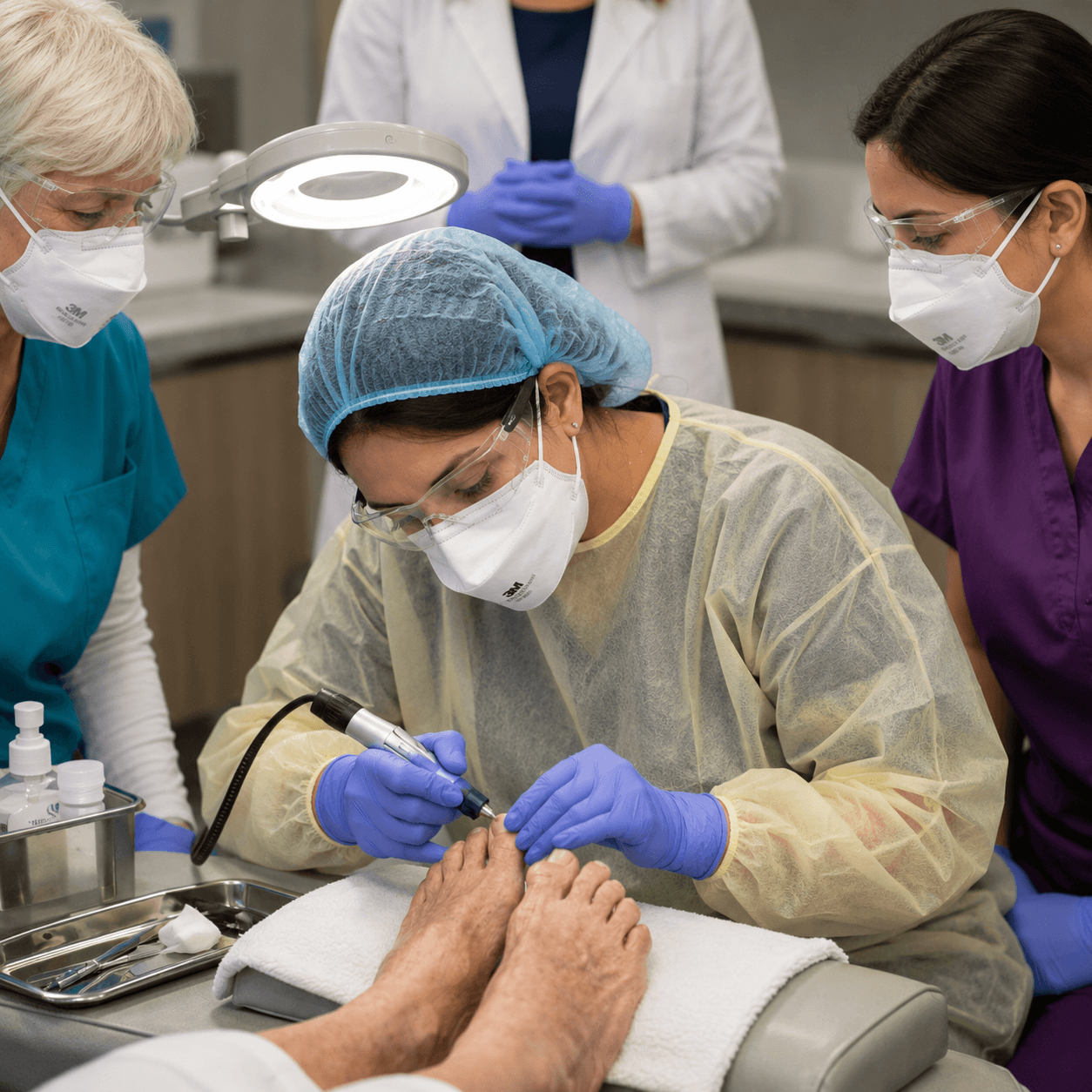
Skill development usually occurs through demonstration, supervised practice, and competency evaluation. As nurses gain familiarity with tools and techniques, Building Confidence in Advanced Foot Care becomes a gradual process supported by education and clinical reflection.
Infection Prevention and Reprocessing
Foot care environments require careful attention to infection prevention. Nurses must understand:
Instrument cleaning and sterilization
Medical device reprocessing protocols
Personal protective equipment
Environmental hygiene
Education in infection prevention and medical device reprocessing is often integrated into foot care nursing courses to support patient safety.
For additional educational guidance, nurses may explore resources available through the AFCN Learning Institute education hub, which discusses foundational topics related to foot care nursing practice.
Professional Considerations for Canadian Nurses
Foot care nursing practice must align with professional standards and regulatory expectations. Building Confidence in Advanced Foot Care includes understanding how clinical procedures fit within broader professional responsibilities.
Scope of Practice
Nursing scope of practice in Canada is determined by:
Provincial or territorial regulatory colleges
Employer policies and clinical guidelines
Individual nurse competence and education
Because regulations vary across jurisdictions, nurses must verify whether specific procedures are permitted within their workplace setting. Educational preparation supports competence, but authorization to practise is determined by the employer and regulatory framework.
Patient Safety
Patient safety remains central to foot care services. Nurses providing advanced procedures must consider:
Infection prevention protocols
Appropriate patient assessment
Use of properly maintained instruments
Referral when concerns exceed nursing scope
Clinical judgment plays an important role in deciding when a procedure should not be performed and when further assessment may be required.
Ethical Practice
Ethical nursing practice includes:
Obtaining informed consent
Practising within competence
Documenting procedures accurately
Maintaining professional boundaries
Ethical decision-making supports trust and accountability in foot care practice. Building Confidence in Advanced Foot Care is closely connected to maintaining these professional standards.
Common Misconceptions About Advanced Foot Care Education
Some nurses exploring continuing education encounter misunderstandings about what advanced foot care education provides.
Misconception 1: Education automatically authorizes practice
Completing a course provides education and a certificate of completion, but it does not independently grant authority to perform procedures. Authorization depends on regulatory scope and employer policies.
Misconception 2: Technical skill alone determines competence
While technical skill is important, competence also involves assessment, infection prevention knowledge, documentation, and professional judgment. Building Confidence in Advanced Foot Care requires integrating all of these elements.
Misconception 3: Experience replaces formal education
Clinical experience is valuable, but structured education helps ensure that nurses understand current safety guidelines, equipment handling, and infection control requirements.
Educational resources such as foundational foot care nursing education and scope of practice education for nurses can help clarify these issues for practitioners entering the field.
Educational Pathways for Skill Development
Continuing education programs may support nurses who wish to develop competence in foot care services. Educational pathways often include multiple components that reinforce safe clinical practice.
Common learning elements include:
Knowledge Development
Foot anatomy and skin integrity
Risk factors associated with chronic illness
Infection prevention principles
Clinical Skills Training
Instrument use and handling
Procedural demonstrations
Supervised skill practice
Professional Practice Topics
Documentation standards
Ethical care considerations
Referral pathways
These learning experiences help nurses strengthen both technical ability and clinical judgment. Over time, Building Confidence in Advanced Foot Care occurs as nurses apply educational knowledge within their professional environment.
Nurses returning to clinical practice may also benefit from professional development and returning-to-practice education resources to support confidence and competence.
Supporting Ongoing Professional Development
Clinical confidence typically develops gradually through repeated exposure, reflective practice, and mentorship. For nurses providing foot care services, continuing professional development may involve:
Participating in structured education
Reviewing updated infection prevention guidance
Engaging in peer learning or mentorship
Reviewing regulatory updates from provincial colleges
Many nurses find that Building Confidence in Advanced Foot Care involves continuous learning rather than a single training experience. Education can support a stronger understanding of both technical procedures and professional responsibilities.
Resources related to clinical skills and foot care tools education may further assist nurses in maintaining competence over time.
Key Takeaways
Building Confidence in Advanced Foot Care requires education, supervised practice, and ongoing professional development.
Nursing scope of practice in Canada varies by province, employer policies, and individual competence.
Completing education provides a certificate of completion, not independent authorization to practise.
Infection prevention and medical device reprocessing are essential components of safe foot care practice.
Clinical judgment, assessment skills, and ethical considerations are central to competent foot care nursing.
Ethical Closing Statement
Foot care nursing education supports nurses in developing knowledge and procedural skills relevant to clinical practice. Building Confidence in Advanced Foot Care involves combining education, experience, and adherence to professional standards. Nurses should always consult their provincial regulatory college and employer policies to determine whether specific procedures fall within their authorized scope of practice.
https://www.afcnlearninginstitute.com/collections
FAQs
What does advanced foot care education include for nurses in Canada?
Advanced foot care education typically includes assessment skills, procedural techniques, infection prevention practices, and professional considerations related to foot care nursing.
Does completing a foot care course authorize nurses to practise independently?
No. Education provides a certificate of completion. Authorization to perform procedures depends on provincial regulatory standards, employer policies, and the nurse’s demonstrated competence.
Why is infection prevention important in foot care practice?
Foot care procedures often involve instruments and close patient contact, so proper infection prevention and medical device reprocessing help reduce the risk of cross-contamination.
How do nurses build confidence in advanced foot care procedures?
Confidence develops through structured education, supervised clinical practice, ongoing professional learning, and adherence to regulatory and workplace standards.