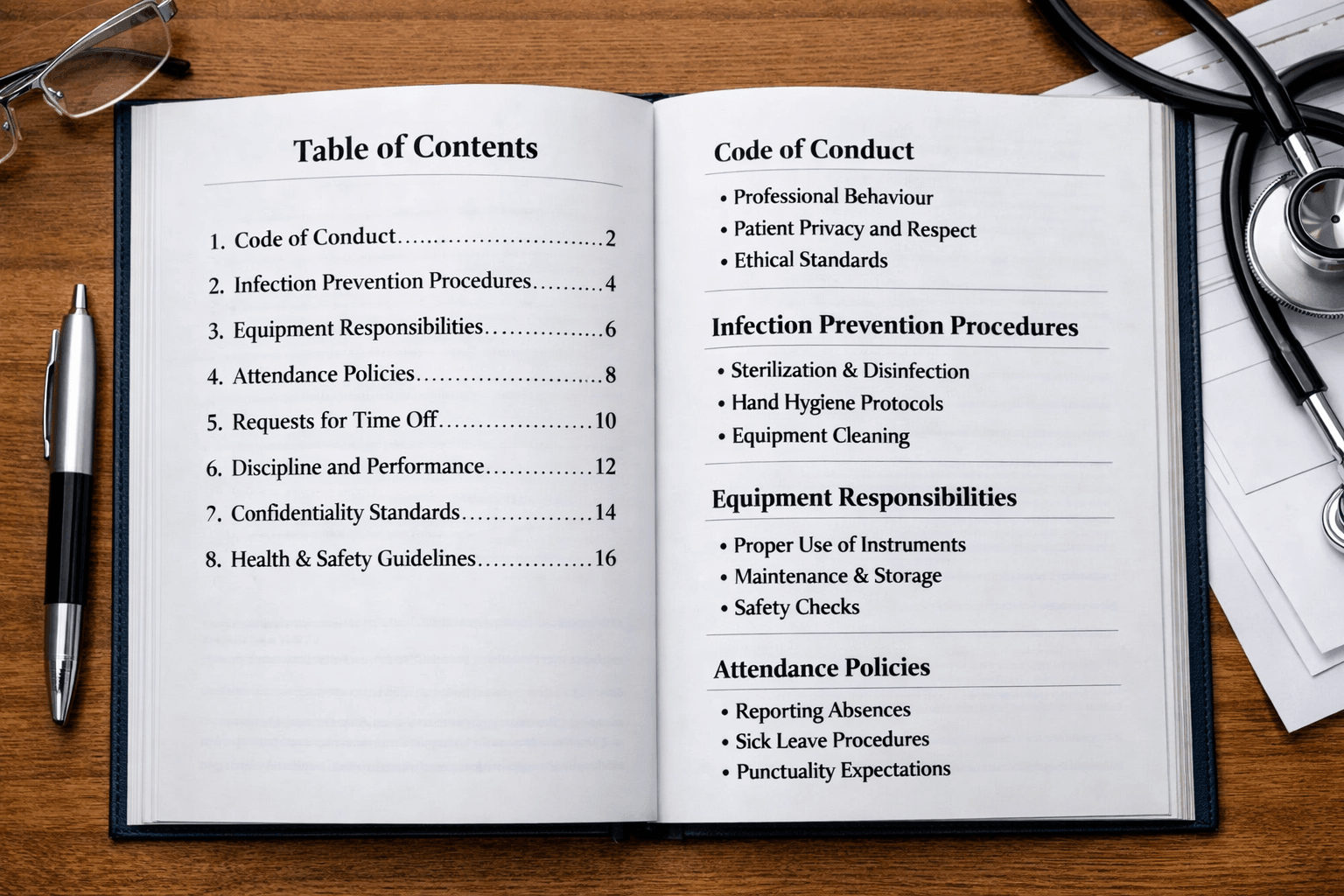

Table of Contents
- What Are Foot Care Business Forms for Nurses in Canada?
- Why Structured Documentation Matters
- Core Components of Professional Foot Care Documentation
- Professional Considerations
- Common Misunderstandings
- Educational Perspective on Documentation Standards
- Practical Implementation Considerations in Canadian Settings
- Key Takeaways
- Closing Statement
- FAQs
Foot Care Business Forms for Nurses in Canada
Foot Care Business Forms for Nurses in Canada are structured documentation tools designed to support ethical, organized, and accountable nursing practice. Canadian nurses providing foot care services in community, clinic, long-term care, or retirement settings rely on clear documentation to demonstrate informed consent, infection prevention processes, and professional boundaries. While templates and guides do not authorize independent practice, properly developed documentation supports alignment with provincial scope of practice requirements and employer policies.
Understanding how standardized forms contribute to professional practice helps nurses maintain regulatory awareness and transparency.
What Are Foot Care Business Forms for Nurses in Canada?
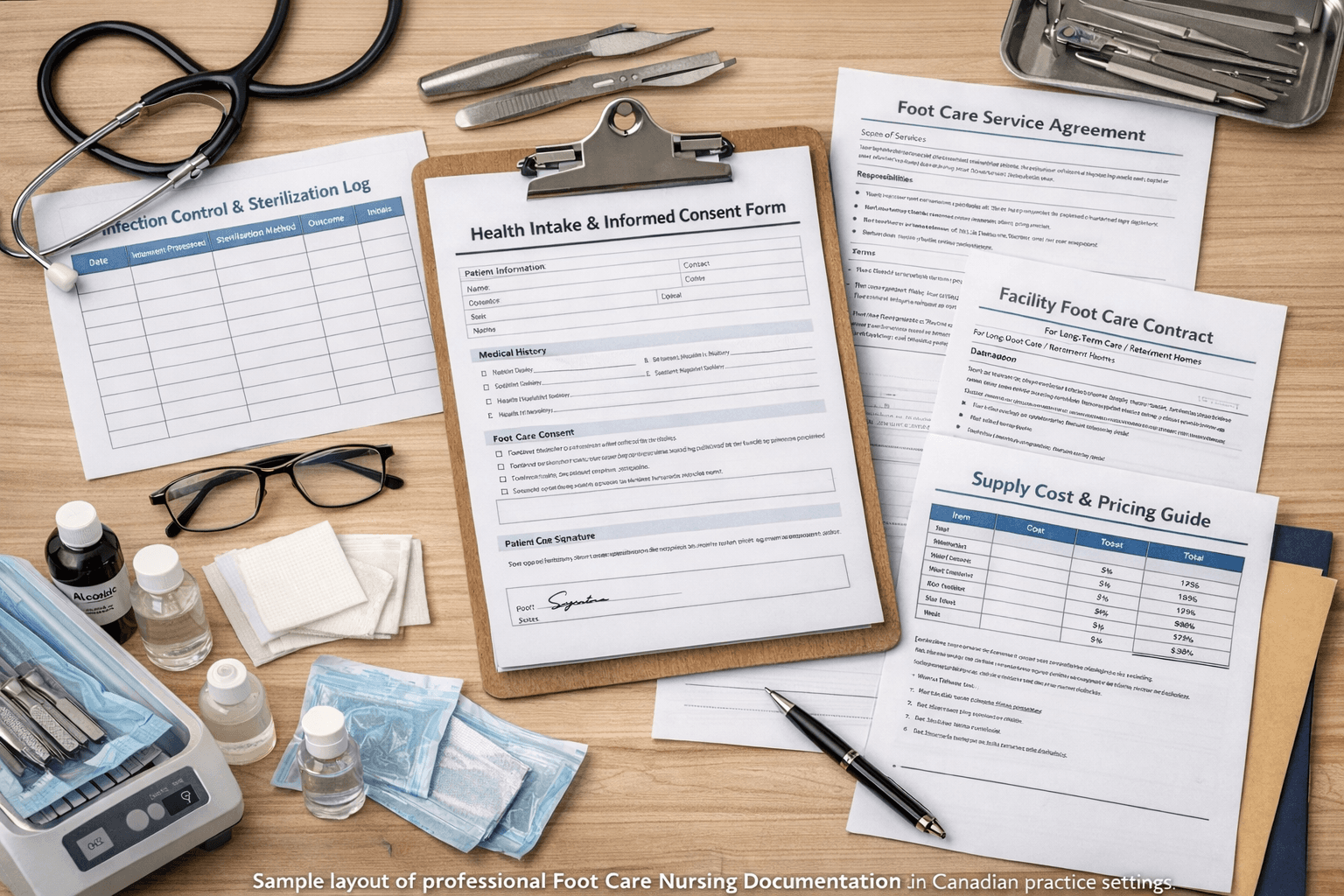
Foot Care Business Forms for Nurses in Canada refer to organized documents used to guide documentation, clarify services, and support safe practice. These materials may include clinical intake forms, consent documents, sterilization logs, policy manuals, and service agreements.
Importantly, these forms function as support tools. They do not replace professional judgment, provincial nursing standards, or employer-specific requirements.
Nurses remain accountable to their regulatory college or association. Documentation must reflect accurate clinical reasoning and comply with jurisdictional expectations.
Why Structured Documentation Matters
In foot care nursing, documentation supports several essential responsibilities:
Demonstrating informed consent discussions
Recording relevant health information
Documenting infection prevention procedures
Clarifying service limitations
Supporting continuity of care
Standardized forms promote consistency and reduce the risk of omitted information. They also help nurses prepare for practice reviews or audits.
Additional educational support can be found within the AFCN Learning Institute education hub, where documentation principles are discussed in the context of foot care nursing.
Core Components of Professional Foot Care Documentation
Health Intake and Consent Records
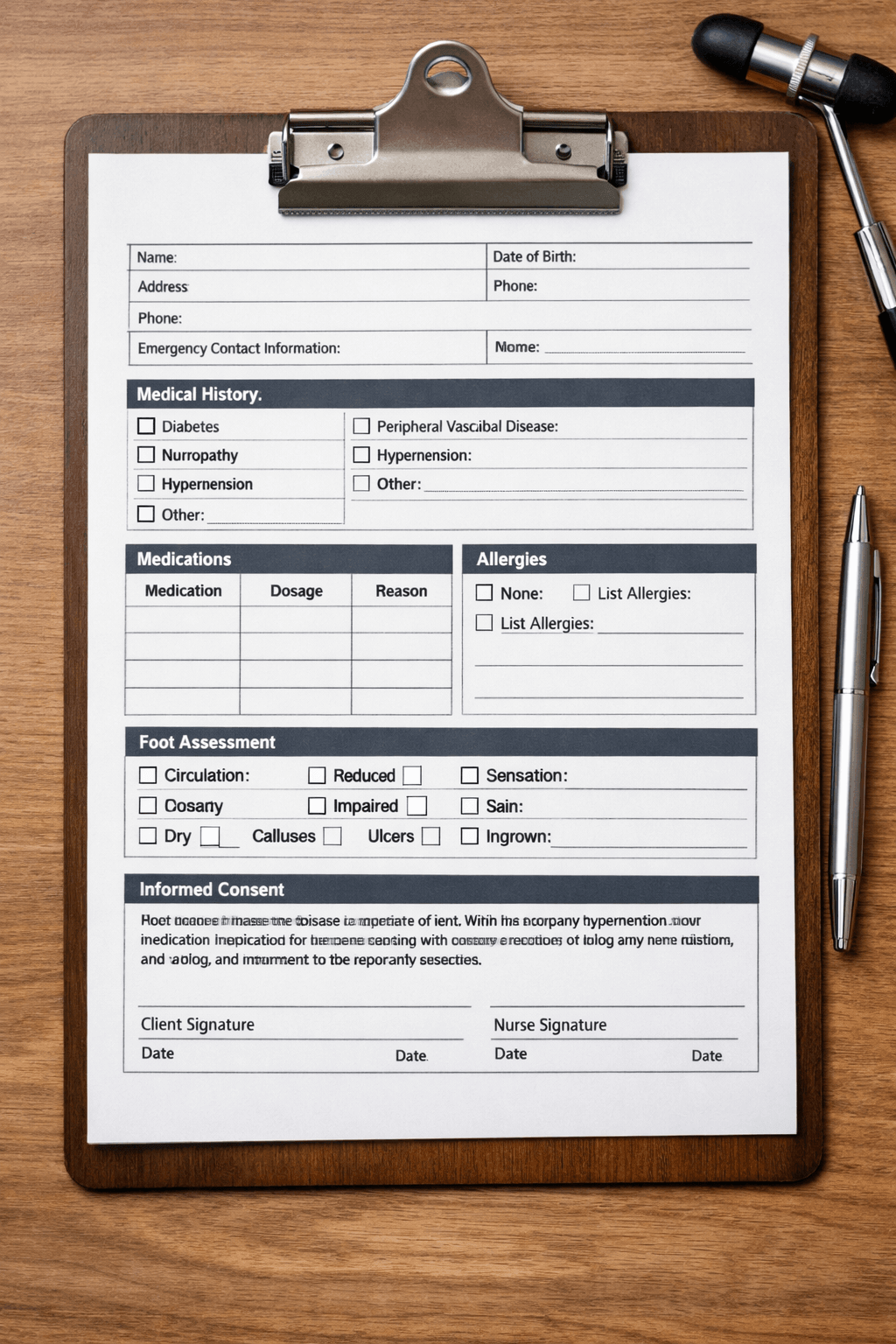
A comprehensive intake document typically captures:
Client-reported medical history
Medication disclosures
Circulatory or neuropathic concerns
Description of services provided
Confirmation of client understanding
Consent is an ongoing conversation. Written acknowledgement supports the process but does not replace ethical communication.
Nurses seeking structured guidance may review foundational foot care nursing education resources to strengthen documentation practices.
Infection Prevention and Reprocessing Records
Because foot care involves instruments and potential exposure to microorganisms, documented infection prevention procedures are essential.
These may include:
Cleaning and disinfection protocols
Sterilization cycle logs
Equipment maintenance tracking
Reprocessing verification documentation
Clear policies reinforce accountability and preparedness for inspection. Educational materials on this topic are available through infection prevention and medical device reprocessing education resources.
Service Agreements in Facility Settings
When nurses provide services in long-term care or retirement homes, written agreements can outline:
Scope and limitations of services
Scheduling arrangements
Communication expectations
Documentation responsibilities
These agreements must align with employer policy and regulatory standards. Nurses should consult the scope of practice education for Canadian nurses when clarifying boundaries.
Operational Organization Tools
Some documentation systems include tools for:
Supply tracking
Record retention schedules
Appointment documentation templates
Service logs
While organizational tools improve efficiency, professional standards remain the primary guide for practice decisions.
Continuing education support can be accessed through professional development resources for Canadian nurses.
Professional Considerations
Scope of Practice
Education and documentation resources do not expand the scope of practice. Authorized activities depend on provincial regulation, employer policies, and individual nursing designation.
Nurses must independently verify that all services provided fall within their legislated scope.
Ethical Accountability
Documentation should:
Accurately reflect services delivered
Avoid misleading language
Maintain client confidentiality
Demonstrate professional reasoning
Forms support consistency but do not replace ethical responsibility.
Safety and Risk Awareness
Structured documentation encourages nurses to consider:
Infection control standards
Client-specific risk factors
When referral to another healthcare provider may be appropriate
Safe practice relies on competence, continuing education, and adherence to standards.
Common Misunderstandings
It is important to clarify that structured business documentation:
Does not provide legal immunity
Does not override provincial standards
Does not eliminate professional accountability
Does not substitute for clinical competence
Forms should be viewed as organizational supports within a regulated profession.
Educational Perspective on Documentation Standards
From a nursing education standpoint, Foot Care Business Forms for Nurses in Canada help reinforce documentation consistency and structured communication. When developed thoughtfully, they guide nurses through consent discussions, infection prevention processes, and service clarification.
However, documentation is only one component of professional practice. Ongoing education, reflective practice, and regulatory awareness remain central to safe foot care nursing.
Nurses exploring advanced learning pathways may benefit from reviewing structured education within the AFCN continuing competency framework resources.
Practical Implementation Considerations in Canadian Settings
When integrating Foot Care Business Forms for Nurses in Canada into practice, nurses should first review their provincial regulatory standards and employer policies. Documentation processes must align with legislated record-keeping requirements, privacy legislation, and workplace expectations. In some provinces, specific guidance may exist regarding record retention timelines, storage security, and electronic documentation standards.
Nurses providing services in community or independent settings should ensure that documentation systems support confidentiality. This includes secure storage of paper records, password-protected electronic systems, and clear policies regarding data access. Even when standardized templates are used, individual entries must reflect accurate, client-specific information rather than generalized statements.
In facility-based environments such as long-term care or retirement residences, documentation should integrate with existing interdisciplinary records whenever required. Communication between nursing staff, facility administration, and other healthcare providers must remain clear and consistent. Structured forms can help ensure that relevant assessment findings and care discussions are appropriately recorded.
It is also advisable for nurses to periodically review and update documentation tools to ensure alignment with current infection prevention standards and evolving regulatory expectations. Continuing education plays an important role in maintaining competence in both clinical skills and documentation practices.
By approaching documentation as a dynamic and regulated component of professional practice, nurses can use structured tools responsibly while maintaining full accountability for safe, ethical care delivery.
Key Takeaways
Foot Care Business Forms for Nurses in Canada support structured, ethical documentation
Standardized forms help reinforce informed consent and infection prevention processes
The scope of practice varies by province and employer
Documentation tools do not replace professional judgment
Ongoing education remains essential for safe practice
Closing Statement
Foot Care Business Forms for Nurses in Canada can strengthen documentation practices when used appropriately within regulatory and ethical boundaries. Canadian nurses must ensure all documentation aligns with provincial standards, employer expectations, and professional accountability requirements. Education and reflective practice remain foundational to safe and competent foot care nursing.
https://www.afcnlearninginstitute.com/bundles/ultimate-form-foot-care-business-package
FAQs
What are Foot Care Business Forms for Nurses in Canada?
Foot Care Business Forms for Nurses in Canada are structured documents used to support informed consent, documentation, infection prevention, and professional communication in foot care nursing practice.
Do foot care business forms authorize nurses to practise independently?
No. Forms do not authorize practice or expand scope. Nurses must follow provincial regulation, employer policies, and professional standards regardless of documentation used.
Are informed consent forms required for foot care nursing?
Informed consent is a professional requirement. Forms may support the consent process, but consent must always involve clear communication and ongoing client understanding.
Can standardized forms replace professional judgment?
No. Forms are tools that support practice. Professional judgment, competence, and ethical decision-making remain the nurse’s responsibility.