
Table of Contents
- Understanding Critical Thinking Skills for Foot Care Nurses
- Key Assessment Concepts in Critical Thinking Skills for Foot Care Nurses
- Professional Responsibilities in Critical Thinking Skills for Foot Care Nurses
- Common Misconceptions About Critical Thinking in Foot Care Nursing
- Nursing Education and Critical Thinking Development
- Key Takeaways
- Ethical Closing Statement
- FAQs
Critical Thinking Skills for Foot Care Nurses
Foot care nursing requires thoughtful clinical judgment in addition to technical skill. Nurses providing foot care frequently work with individuals who have chronic conditions, mobility limitations, circulatory concerns, or age-related changes affecting skin and nail health. In these situations, Critical Thinking Skills for Foot Care Nurses support safe assessment, risk recognition, and appropriate clinical decision-making.
Nursing care in foot health settings often takes place in community environments, long-term care facilities, or home care settings. In these environments, nurses may need to interpret clinical findings independently while remaining within their authorized scope of practice.
Because nursing scope of practice varies by province, territory, and employer policy in Canada, nurses must combine clinical reasoning with professional accountability. Education supports knowledge development, but a certificate of completion from a course does not independently authorize practice.
For this reason, Critical Thinking Skills for Foot Care Nurses remain an essential component of safe and responsible nursing care.
Understanding Critical Thinking Skills for Foot Care Nurses
At its core, critical thinking involves analyzing information, recognizing patterns, and making safe decisions based on clinical evidence and professional standards. Critical Thinking Skills for Foot Care Nurses help translate assessment findings into appropriate nursing actions.
Critical thinking typically includes several interconnected steps:
Collecting accurate assessment data
Interpreting clinical findings
Identifying potential risk factors
Determining appropriate nursing interventions
Recognizing when referral or consultation is needed
These steps occur continuously during nursing care, particularly when assessing the feet of individuals with complex health histories.
For nurses exploring further professional education, the AFCN Learning Institute education hub provides foundational educational resources relevant to foot care nursing practice.
Key Assessment Concepts in Critical Thinking Skills for Foot Care Nurses
Clinical reasoning begins with careful assessment. Critical Thinking Skills for Foot Care Nurses depend on the ability to gather and interpret relevant information during each client encounter.
Observation and Clinical Awareness
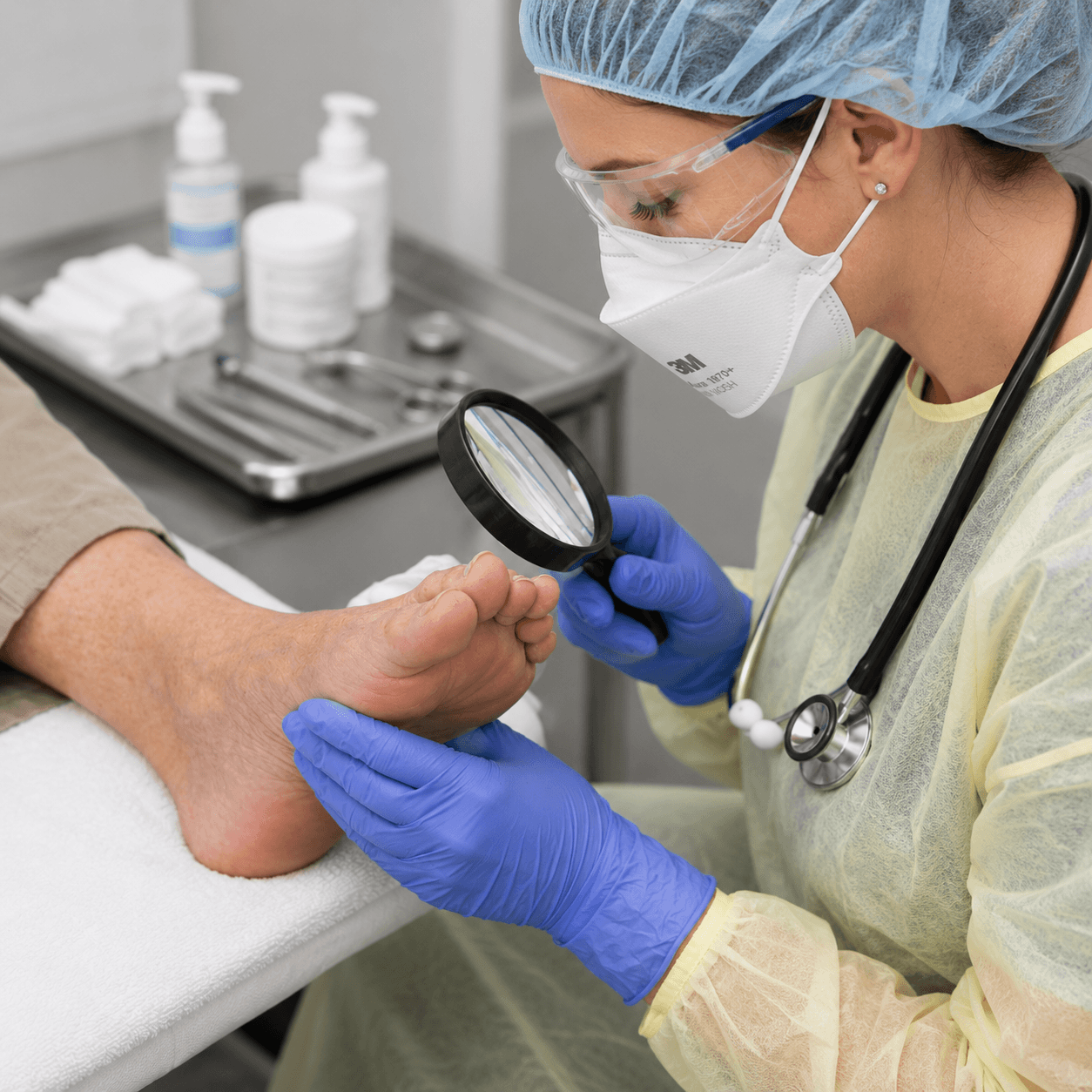
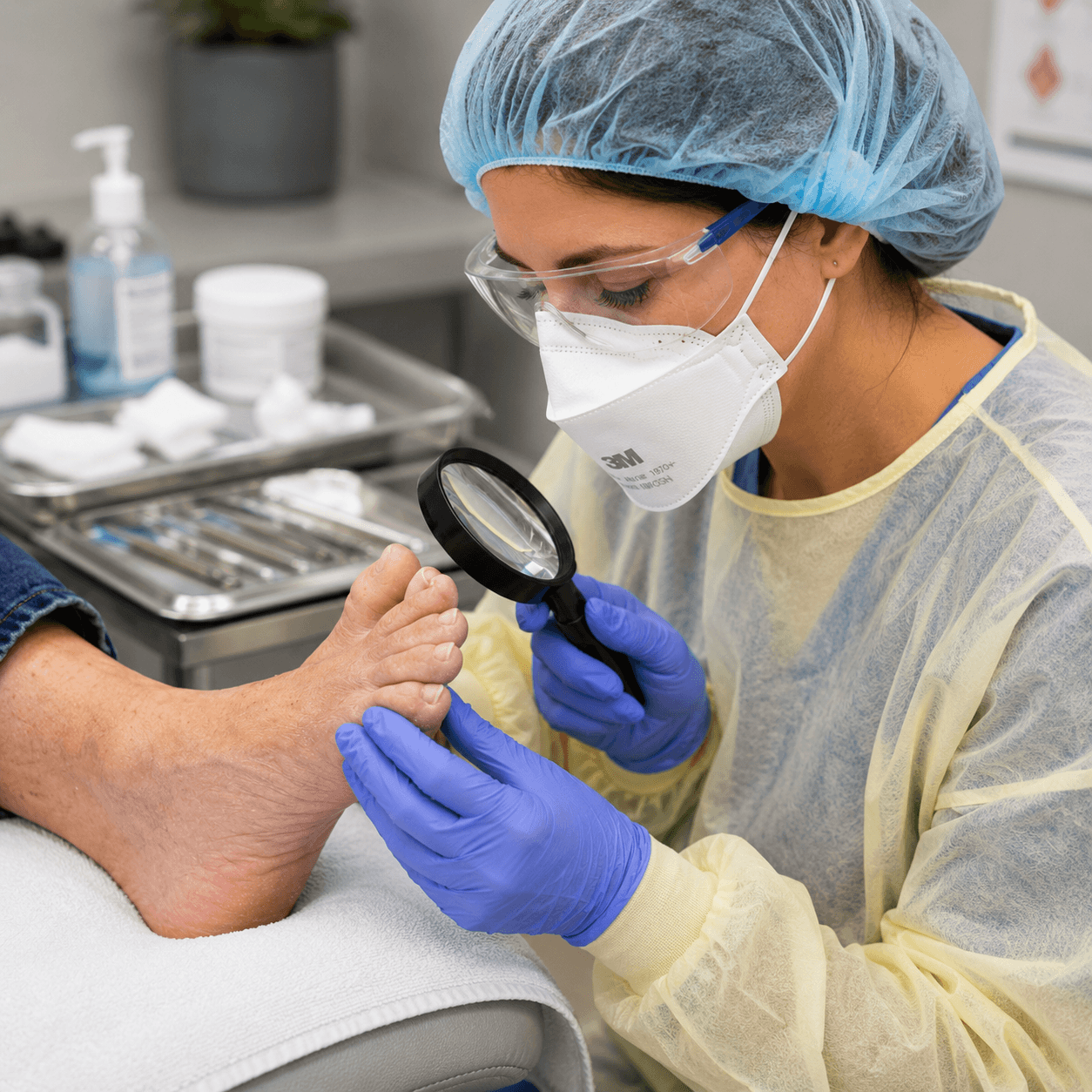
Nurses begin by observing visible and tactile changes in the feet and lower limbs.
Examples of observations may include:
Nail thickness or deformity
Skin dryness or cracking
Presence of callus or pressure areas
Signs of inflammation or infection
Changes in temperature or colour
These findings alone do not determine treatment decisions. Instead, nurses interpret them within the broader context of the client’s health history.
Additional education resources on assessment and clinical reasoning are often included in foundational foot care nursing education.
Pattern Recognition in Nursing Assessment
Pattern recognition allows nurses to connect multiple assessment findings into meaningful clinical insight.
For example:
| Assessment Observation | Possible Clinical Consideration |
|---|---|
| Thickened nails with reduced sensation | Potential neuropathy risk |
| Cool feet and delayed capillary refill | Possible circulatory concerns |
| Repeated callus formation | Pressure or footwear issues |
| Redness near nail folds | Potential infection risk |
Through experience and education, nurses become more comfortable recognizing patterns that may require caution, modification of care, or referral.
Educational content related to clinical skills and tools used in foot care nursing can further support these competencies.
Professional Responsibilities in Critical Thinking Skills for Foot Care Nurses
Clinical reasoning in foot care nursing must always occur within professional nursing standards and regulatory expectations. Critical Thinking Skills for Foot Care Nurses support safe decision-making within those boundaries.
Scope of Practice Considerations
In Canada, nursing scope of practice is determined by:
Provincial or territorial nursing regulators
Employer policies and clinical guidelines
Individual education and demonstrated competence
A nurse who completes foot care education receives a certificate of completion, indicating educational participation. However, this education alone does not grant authorization to practise specialized services independently.
Nurses must always follow regulatory expectations established by their provincial nursing college.
Educational guidance on regulatory awareness can be found through scope of practice education resources.
Infection Prevention and Safety
Foot care nursing involves the use of instruments and close contact with skin and nails. As a result, infection prevention and reprocessing procedures are critical components of safe care.
Clinical reasoning may include recognizing situations where:
Sterile technique may be required
Instruments must be reprocessed according to guidelines
A procedure should be postponed due to infection risk
Further learning opportunities related to safety practices are discussed within infection prevention and medical device reprocessing education.
Common Misconceptions About Critical Thinking in Foot Care Nursing
Several misunderstandings can affect how nurses approach clinical reasoning in foot care environments.
Misconception: Foot care is primarily technical
Foot care procedures may appear procedural, but safe care requires ongoing assessment and judgment. Critical Thinking Skills for Foot Care Nurses help nurses recognize risk factors that may not be immediately obvious.
Misconception: Education automatically authorizes practice
Educational programs provide knowledge and competency development. However, regulatory authorization to perform specific nursing activities is determined by provincial nursing regulators and employer policies.
Misconception: Experience alone replaces structured learning
Clinical experience is valuable, but structured education helps nurses develop systematic approaches to assessment, infection prevention, and documentation.
Nurses returning to practice or exploring continuing education may benefit from professional development resources for nurses returning to practice.
Nursing Education and Critical Thinking Development
Professional education programs play an important role in strengthening clinical reasoning. Critical Thinking Skills for Foot Care Nurses develop through a combination of structured learning, supervised practice, and reflective experience.
Education programs commonly support critical thinking by focusing on:
Structured assessment techniques
Recognition of clinical risk factors
Infection prevention principles
Ethical and regulatory awareness
Documentation and communication skills
In foot care nursing, these competencies help nurses provide thoughtful and safe care while respecting the limits of their professional scope.
Developing these skills also helps nurses adapt to changing client needs, particularly when caring for older adults or individuals with complex health conditions.
Key Takeaways
Critical Thinking Skills for Foot Care Nurses support safe assessment and clinical judgment.
Clinical reasoning involves observation, interpretation, and appropriate nursing decision-making.
Scope of practice varies by province, territory, and employer in Canada.
Completing education results in a certificate of completion, not automatic authorization to practise.
Ongoing education and reflective learning strengthen professional nursing practice.
Ethical Closing Statement
Foot care nursing involves thoughtful clinical assessment, professional accountability, and adherence to regulatory standards. Strengthening Critical Thinking Skills for Foot Care Nurses supports safe decision-making and helps nurses provide responsible, client-centred care within their authorized scope of practice.
https://www.afcnlearninginstitute.com/
FAQs
What are critical thinking skills in foot care nursing?
Critical thinking skills involve assessing clinical findings, interpreting risks, and making safe nursing decisions during foot care assessments.
Why are critical thinking skills important for foot care nurses?
They help nurses identify complications, evaluate client risk factors, and determine appropriate nursing interventions or referrals.
Does completing a foot care nursing course authorize independent practice in Canada?
No. Education programs provide a certificate of completion. Authorization to practise depends on provincial nursing regulations and employer policies.
How can nurses improve critical thinking in clinical practice?
Ongoing education, reflective practice, structured assessment methods, and professional development opportunities can strengthen clinical reasoning skills.